
2026 Best Retort Pouch Types for Global Buyers?

Choosing the best Retort Pouch in 2026 requires more than comparing glossy films or low unit prices. Global buyers must examine food texture, filling temperature, sterilization conditions, transport distance, and opening behavior. A pouch that performs well with curry may fail with bone-in meat or sharp frozen ingredients. Small details matter.

Smithers’ global flexible packaging research identifies continued growth in high-barrier and shelf-stable formats through the decade. Grand View Research also reports expanding demand for retort packaging, driven by convenience foods, military meals, pet food, and emerging-market retail. However, market estimates differ because report scopes and definitions are not identical. That uncertainty deserves attention.

Walter Soroka, author of Fundamentals of Packaging Technology, describes packaging as “the science, art, and technology” of protecting products through distribution and use. His principle fits Retort Pouch selection closely. The package must protect the product, but it must also survive a 121°C thermal process, warehouse stacking, rough handling, and repeated consumer contact.

This 2026 guide compares aluminum-foil, transparent high-barrier, polypropylene, recyclable mono-material, and spouted retort pouch types. It considers barrier performance, seal strength, retort resistance, filling compatibility, recyclability, and total supply-chain cost. Recyclability should not be treated as a simple label. Local collection systems, pouch construction, and actual recovery capacity can change the result.

The most expensive pouch is not always the safest choice. The cheapest one may create hidden failures. Buyers should request migration data, seal-testing records, process validation, and trial samples before approving volume production. Some recommendations may still need revision as recycling infrastructure and material technology improve.
2026 Best Retort Pouch Types for Global Buyers?

Retort Pouch Basics: Structure, Materials, and Sterilization

For global buyers in 2026, retort pouch selection starts with the product, not the artwork. A typical pouch uses polyester, aluminum foil, and polypropylene. Polyester adds print strength. Aluminum improves oxygen and light protection. Polypropylene forms the heat-sealable food-contact layer.

Clear structures can replace foil when product visibility matters. However, barrier performance may decrease. Multilayer designs must match acidity, fat content, filling temperature, and storage time. Grand View Research estimates the global retort packaging market will grow at about 6% annually through 2030. That growth reflects demand for lighter, shelf-stable packaging, not one universal material choice.

Sterilization commonly uses saturated steam or water spray inside a retort vessel. Commercial processes often reach approximately 121°C, but time and pressure depend on pouch thickness and food formulation. The FDA Food Code emphasizes validated thermal processing for low-acid, shelf-stable foods. Buyers should request heat-penetration studies, seal-strength tests, and migration documentation. Seals deserve special attention. A tiny wrinkle can become a serious leakage path.

Smithers’ flexible-packaging research identifies downgauging and recyclable structures as continuing industry priorities. Yet recyclable retort films remain technically difficult because high barriers and strong seals must work together. That limitation is easy to overlook. A thinner pouch may reduce material use, but it can lose puncture resistance during shipping. Real distribution trials, including stacking and hot-weather storage, remain more reliable than catalog claims.

Main Retort Pouch Types and Their Functional Differences

2026 Best Retort Pouch Types for Global Buyers?

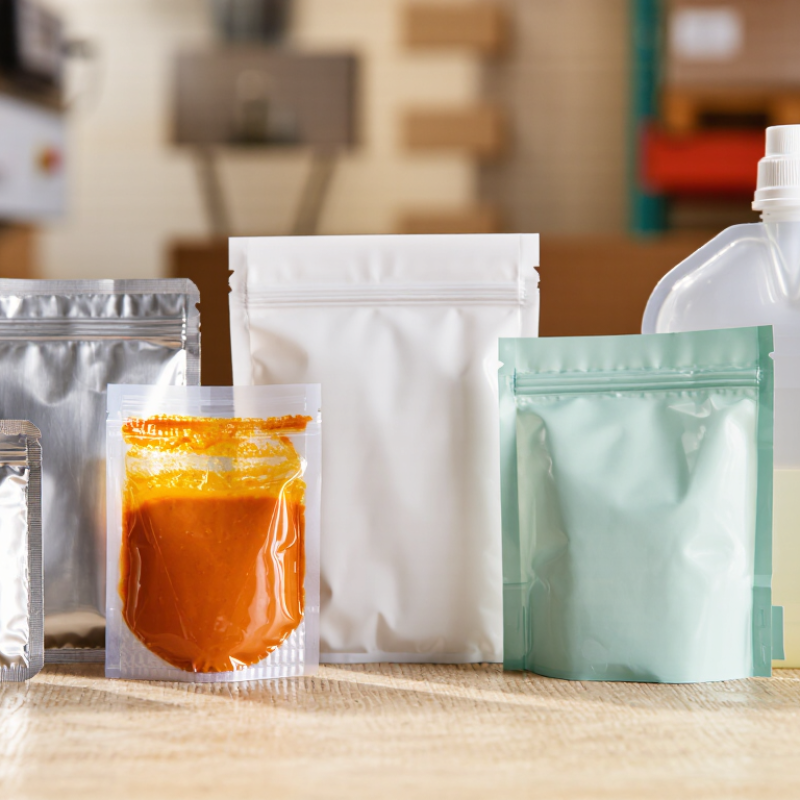
Retort pouches differ mainly in shape, barrier structure, and dispensing design. Flat pouches use little material and stack efficiently in cartons. They suit soups, sauces, seafood, and ready meals. Their broad seal area also supports reliable processing when the fill level is controlled.

Stand-up retort pouches add a bottom gusset for shelf display. They offer better visibility and easier handling at retail. However, the gusset can create stress during filling and sterilization. Small wrinkles near the seal deserve careful inspection. A pouch may look attractive but still fail under pressure.

Spouted pouches improve pouring and portion control. They work well for sauces, baby food, and liquid meals. The fitment and cap need retort-compatible materials and validated sealing conditions. Clear high-barrier structures let buyers see the product, while foil laminates provide stronger light and oxygen protection. Yet foil hides the contents and needs special consideration for reheating. Microwave use requires a specifically engineered structure, not a casual assumption.

Procurement teams should compare oxygen transmission, moisture resistance, seal strength, drop performance, and retort temperature. Laboratory figures help, but production trials reveal more. Watch for delamination, swollen corners, and difficult opening after cooling.

Shelf life can change with filling temperature, headspace, and transport vibration. The cheapest pouch is rarely the safest choice. I would question any specification that ignores the actual distribution route. Vegan meals, acidic sauces, and oily foods may each require different barrier decisions. There is no universal retort pouch.

How to Select Retort Pouches for Different Food Applications

2026 Best Retort Pouch Types for Global Buyers?

How to Select Retort Pouches for Different Food Applications

Selecting retort pouches starts with food behavior, not appearance. Low-acid meat meals need strong thermal resistance and reliable seals. Soups and sauces need balanced film stiffness, because hot filling can distort weak edges. Acidic foods may need different barrier choices than oily foods. Fat can migrate into some sealant layers. That detail is easy to miss.

For rice, curry, and beans, choose pouches tested for retort temperature, time, and internal pressure. A gusseted pouch offers more volume and stands better on shelves. Flat pouches use less material and suit single portions. Transparent windows improve visibility, but they can reduce light protection. High-barrier structures help protect aroma and color. Metallized layers are useful when oxygen and light are serious risks. However, they may complicate recycling goals.

Ask suppliers for seal-strength data, burst testing, drop testing, and migration documentation. Check performance after real processing, not only before it. Fill samples with the actual recipe, including oil, salt, and food particles. Then inspect corners, seals, and delamination after cooling. A pouch can look perfect and still fail weeks later. Laboratory assumptions may miss production handling. Retort equipment also matters. Steam, water spray, and overpressure cycles stress packages differently. Confirm food-contact compliance for every destination market. Keep records of lot numbers and test conditions. Small trials reveal more than polished claims.

Key Global Buyer Criteria: Safety, Quality, and Compliance

2026 Best Retort Pouch Types for Global Buyers?
Key Global Buyer Criteria: Safety, Quality, and Compliance

Global buyers should evaluate retort pouches by application, filling process, and destination market. High-barrier multilayer pouches suit products needing protection from oxygen, moisture, and light. Transparent structures improve product visibility, but they may provide less light protection. Matte and foil-based options offer stronger shielding. The right choice depends on shelf-life targets.

Safety begins with documented food-contact compliance for every layer, ink, adhesive, and sealant. Ask for migration test reports, batch traceability, and declarations suited to each importing region. Retort performance also requires process validation. A pouch should withstand heat, pressure, and cooling without delamination or leakage. Weak seals can appear only after storage.

Quality needs measurable controls. Review seal-strength data, drop tests, puncture resistance, and dimensional tolerances. Request samples from normal production, not specially prepared pieces. Then test them with the intended filling equipment. Small differences matter. A glossy pouch can still hide poor sealing. Buyers should also inspect factory hygiene, calibration records, corrective actions, and change-control procedures. Compliance documents may look complete, yet outdated specifications create risk. Recheck them before every major order.

Packaging Trends and Sourcing Considerations for 2026

2026 Best Retort Pouch Types for Global Buyers?

Packaging Trends and Sourcing Considerations for 2026

Global buyers are comparing more than pouch appearance in 2026. Standard flat retort pouches remain practical for soups, sauces, seafood, and ready meals. Stand-up formats improve shelf visibility and pouring convenience. Spouted pouches suit products used in controlled portions. High-barrier structures help protect aroma, color, and texture during storage. Material selection should match the product, retort temperature, filling process, and expected shelf life.

Sourcing teams are also examining recyclable mono-material options. These structures may support future recycling goals, but performance can vary by supplier and application. Ask for oxygen and moisture barrier data, seal-strength results, retort validation, and migration testing. Confirm whether samples were tested under real production conditions. A pouch that passes laboratory testing may still fail on a fast filling line. That detail is often missed.

Supplier audits should review raw-material traceability, quality controls, printing accuracy, and corrective-action records. Request pilot quantities before agreeing to large volumes. Check minimum order quantities, tooling costs, lead times, and delivery buffers. Regional packaging requirements also differ, so technical documents need careful review. Lower pricing can hide weaker seals or inconsistent thickness. I have seen attractive samples perform poorly after repeated heating. Sourcing decisions should leave room for testing, adjustment, and honest reconsideration.

Filter By