Top Benefits of Using Strip Lights for Home Decoration?
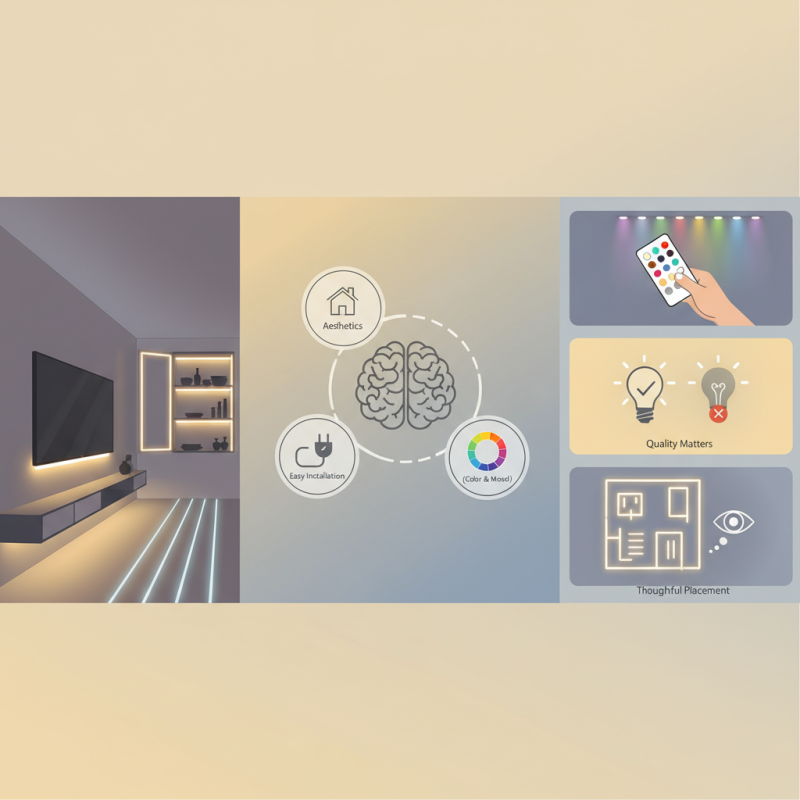
Strip lights have become a popular choice for home decoration. As interiors evolve, these flexible light strips enhance both aesthetics and functionality. Renowned lighting designer, Emma is known for her expertise in modern home lighting. She once said, "Strip lights can transform any space, adding both warmth and character."
Whether you want to highlight architectural features or create a cozy ambiance, strip lights offer endless possibilities. They can be used under shelves, along corridors, or even inside cabinets. The convenience of installation adds to their allure. However, some miss the mark by choosing low-quality options that do not last. These choices can lead to frustration and inefficiency.
Color-changing strip lights provide versatility for any mood. Yet, overusing them can create an overwhelming effect if not carefully planned. Balancing brightness and color is essential. While strip lights do enhance a room, their placement deserves thoughtful consideration. In the end, the right strip lights can elevate your home, but they require a discerning eye.
Benefits of Strip Lights for Home Ambiance Enhancement
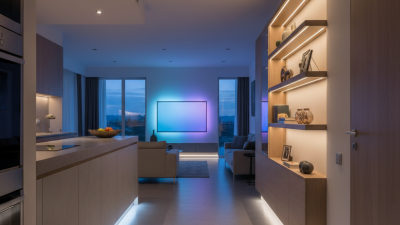
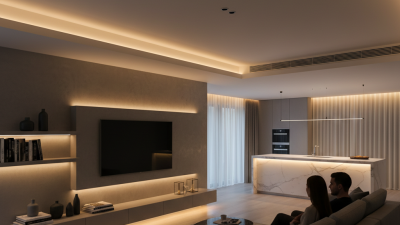
Strip lights serve as a versatile tool for enhancing home ambiance. These lights can transform any space. Imagine soft, glowing tones that create a calming atmosphere. They can be placed under cabinets and behind furniture to provide a subtle accent. The effect can turn an ordinary room into a cozy retreat.
Adding strip lights to corners or around mirrors can cast interesting shadows. This plays with light in unique ways. However, placing them improperly may lead to uneven lighting. Some areas might end up too dim while others are overwhelmingly bright. It’s important to find the perfect balance for the desired effect.
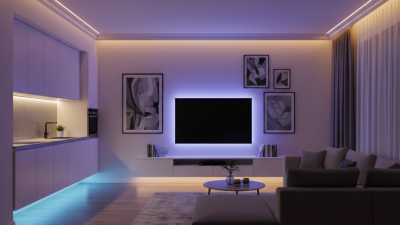
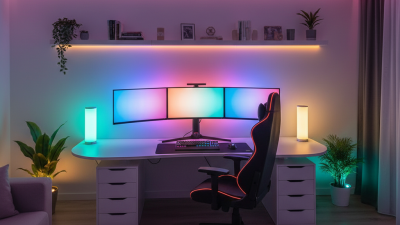
In addition, color-changing options allow for instant mood shifts. You can choose warm hues for relaxation or vibrant colors for celebration. Nevertheless, too much color can become overwhelming. Striking a balance is key to achieving the perfect vibe. Experimenting with the placement and color settings can make a significant difference, enhancing your living space like never before.
Energy Efficiency and Cost-Effectiveness of LED Strip Lights
LED strip lights have gained popularity in home decoration for several reasons. One notable advantage is their energy efficiency. According to the U.S. Department of Energy, LED lights use at least 75% less energy than traditional incandescent bulbs. This significant reduction in energy consumption translates to lower electricity bills.
These strip lights typically have a lifespan of about 25,000 hours. This longevity means fewer replacements, which can save money in the long run. However, not everyone considers the initial investment of LED strip lights. Some might find them pricier than traditional options. It's essential to weigh the initial cost against future savings.
Furthermore, the versatility of LED strip lights enhances their appeal. They can be used in various settings, from under cabinets to accentuating architectural features. This adaptability adds value to the home. Yet, improper installation or overuse can lead to disappointment. It’s important to plan the layout carefully. While LED strip lights promise cost-effectiveness and energy savings, their implementation requires thoughtful consideration.
Top Benefits of Using Strip Lights for Home Decoration
| Benefit |
Description |
Energy Efficiency |
Cost-Effectiveness |
| Versatility |
Can be used in various locations and styles. |
Uses less energy compared to traditional bulbs. |
Longer lifespan reduces replacement costs. |
| Easy Installation |
Simple setup process, often with adhesive backing. |
Lower energy consumption during operation. |
Affordable initial costs make it budget-friendly. |
| Color Variety |
Available in multiple colors and brightness levels. |
LED technology provides efficient lighting in different colors. |
Reduces need for multiple light fixtures. |
| Decorative Appeal |
Enhances ambiance and aesthetic of any space. |
Saves more energy due to targeted lighting. |
Low maintenace costs due to fewer replacements. |
| Safety Features |
LEDs are cool to the touch, reducing fire risk. |
Minimizes heat emissions compared to traditional lights. |
Cost savings on energy bills from reduced heat output. |
Creative Application Ideas for Strip Lights in Different Spaces
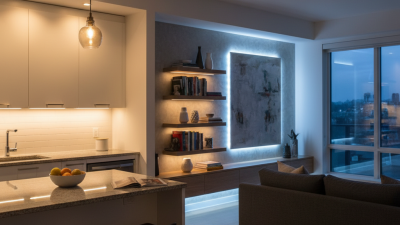
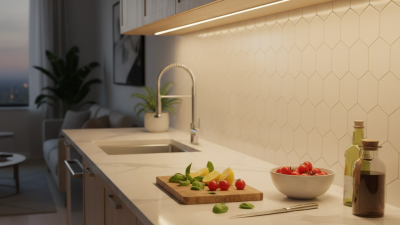
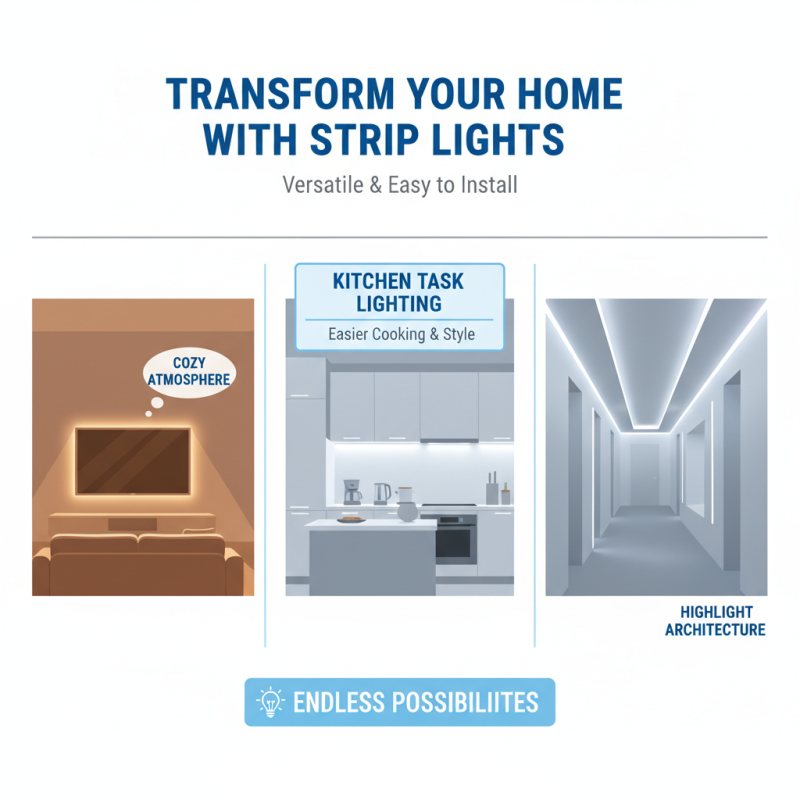
Strip lights can transform any space in your home. They are versatile and easy to install. Whether you want to create a cozy atmosphere or highlight architectural features, strip lights offer endless possibilities. For instance, placing them under kitchen cabinets can provide functional lighting while adding style. This simple addition makes cooking easier and enhances the room's overall aesthetic.
In the living room, consider wrapping strip lights around shelves. This creates a soft glow that draws attention to your favorite decor items. You might use color-changing options to set different moods for movie nights or gatherings. A well-lit shelf can make even the simplest decor feel special.
Tips: When installing strip lights, keep the power source in mind. Ensure it's conveniently located for easy access. Also, test various colors to see what complements your furniture and wall colors. Play with dimmers to adjust brightness levels throughout the day.
Impact of Color Temperature on Mood and Interior Design Choices
Color temperature greatly affects our mood and perception of space. Warm colors, like soft yellows and oranges, create a cozy and inviting atmosphere. These hues are perfect for living rooms and bedrooms. They promote relaxation and comfort.
In contrast, cooler tones, such as blues and whites, can energize a space. They are suitable for kitchens and workspaces, enhancing focus. Unfortunately, choosing the wrong temperature can lead to a sterile feel. This can make a room feel unwelcoming or emotionally flat. It’s essential to balance temperatures throughout your home.
Strip lights offer flexibility in color temperature. You can change their settings based on your needs. Dim them for a movie night, or brighten them for a productive workspace. Experimenting with different colors can either uplift or calm your senses. Reflecting on how each choice influences your space is important. Just remember, lighting does not just illuminate – it transforms.
Impact of Color Temperature on Mood and Interior Design Choices
This chart illustrates the impact of different color temperatures of strip lights on mood and its relation to interior design choices. The color temperatures range from warm (2700K) to cool (6500K), showing how they influence various moods.
Installation Flexibility and Customization Options for Home Decor
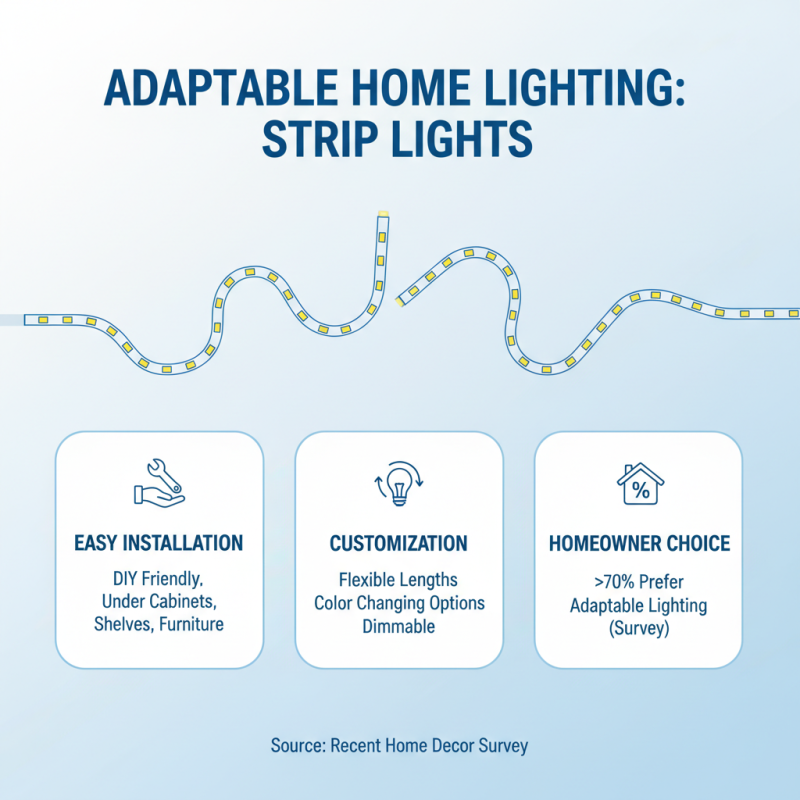
Installation flexibility and customization options make strip lights an attractive choice for home decor. Homeowners can easily install these lights in various spaces. They can fit under cabinets, along shelves, or even around furniture. A recent survey found that over 70% of homeowners appreciate lighting that can adapt to their changing needs.
The ability to customize is crucial. Many strip lights come with adjustable colors and brightness levels. This feature allows individuals to create the perfect ambiance. Research indicates that well-lit environments can improve mood and productivity. Yet, some users may struggle with installation. Understanding the requirements of the space is vital. Misjudgments can lead to unsatisfactory outcomes.
Decorating with strip lights presents opportunities and challenges. They allow for creativity. However, striking a balance between aesthetics and practicality is essential. Poor placements can lead to harsh lighting, diminishing their charm. When choosing strip lights, consider the environment. Factors like wall color and room function play significant roles.