How to Choose the Best RGBW LED Strip for Your Home Lighting Needs?
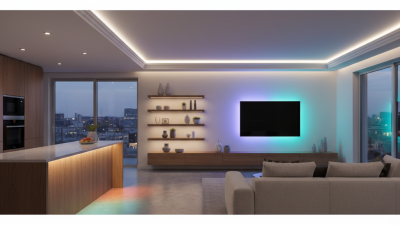
When it comes to creating the perfect ambiance in your home, choosing the right RGBW LED strip can make all the difference. Industry expert Lisa Tran emphasizes, "The right LED strip is not just about color; it’s about feeling." The blend of red, green, blue, and white light ensures versatility that fits any mood.
One must consider various factors when selecting an RGBW LED strip. Not all strips are created equal. Quality matters, as does compatibility with your existing systems. For instance, some strips offer smart controls, while others may require manual switches. Understanding the specifications, like wattage and length, is crucial and can be overwhelming.
Moreover, installation can often present challenges. Ensure proper placement to maximize both brightness and the visual effect. This process can reveal your preferences for color and style. Experimentation may lead to unexpected results, not all of which will be satisfactory. Learning from these trials is key to finding the best RGBW LED strip for your unique lighting needs.
Understanding RGBW LED Strips and Their Advantages
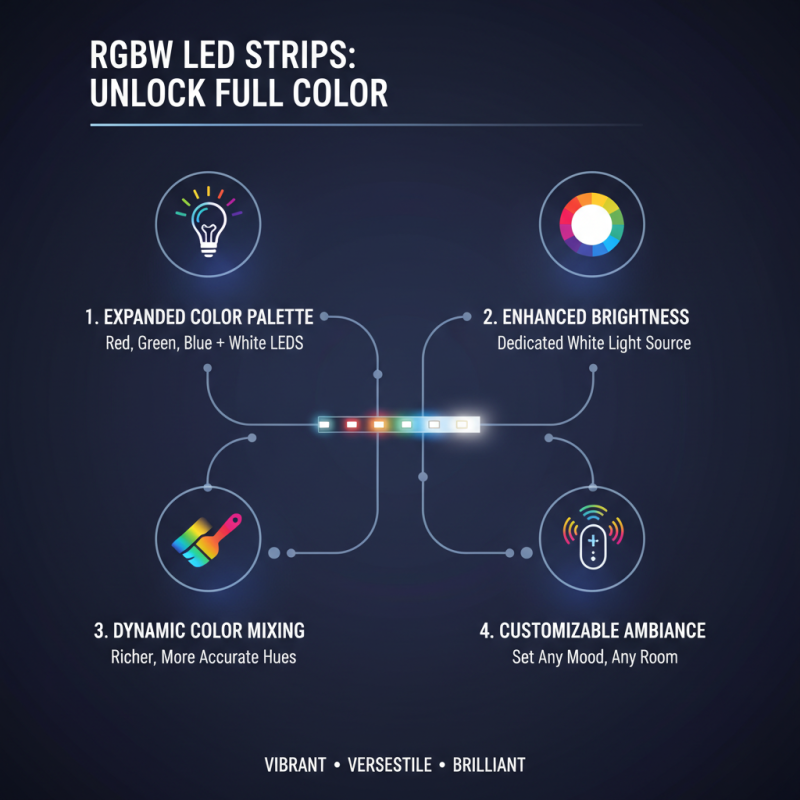
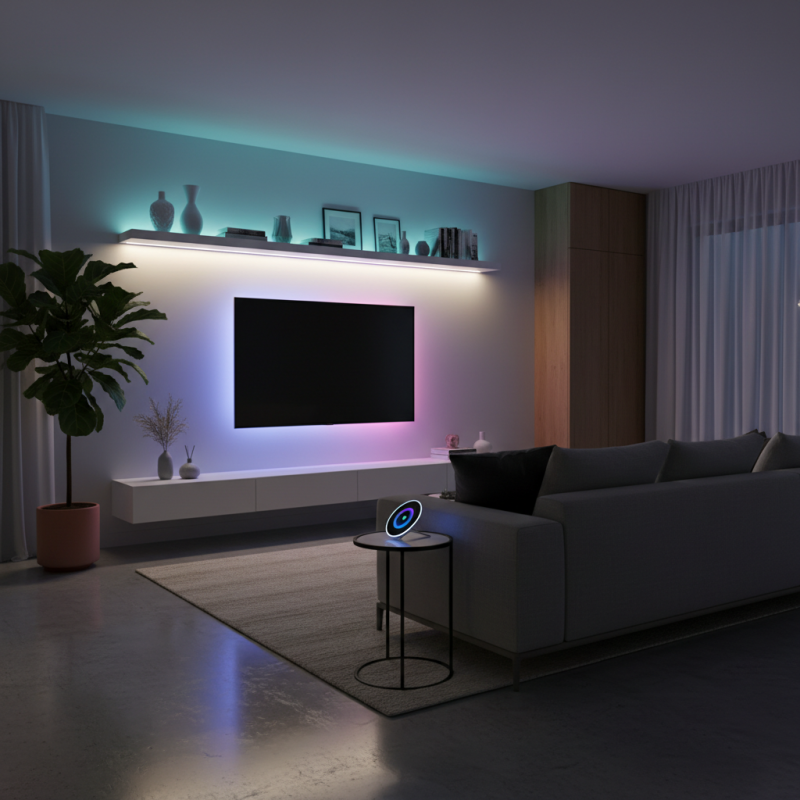
RGBW LED strips offer a unique lighting solution. They combine red, green, blue, and white LEDs to create a wide range of colors. This versatility allows for customized lighting in any room. Utilizing both RGB and white light enhances color mixing and improves brightness. This makes your space feel more vibrant and lively.
Tips for selecting the right strip: Consider the placement of your lights. If they are in a dimly lit area, you might need a strip with higher brightness. Look for a suitable length. You don’t want too much extra, as it can look messy. The adhesive backing can wear out over time. Test it before fully committing to a long installation.
People often overlook power requirements. Make sure your power supply can handle the load. Insufficient power can lead to flickering or poor color performance. Not all strips are created equal. Some may not match your home’s decor. Take time to visualize how the colors will work together. It's worth a bit of extra thought.
Key Factors to Consider When Choosing RGBW LED Strips
When choosing the best RGBW LED strips for your home, consider the brightness level. Brightness can vary significantly between strips. Look for lumens per meter to gauge intensity. A higher lumen count means a more vibrant light. However, higher brightness can be overwhelming in smaller spaces. It’s important to find a balance.
Next, pay attention to color quality. RGBW strips allow for versatile lighting options, but not all produce rich colors. Check the CRI (Color Rendering Index) value; higher values indicate better color accuracy. This matters, especially in areas where color perception is vital, like art studios or kitchens. Adjustability is also crucial. Many people want different moods throughout the day.
Lastly, consider installation aspects. Some strips come with adhesive backing, while others may require mounting hardware. This impacts how easily you can reposition them later. It’s easy to miss these details when you are focused on aesthetics. Planning for future adjustments is wise. Reflect on your space before making a decision.
Comparing Different Types of RGBW LED Strips
When choosing an RGBW LED strip, it's essential to compare the various types available. The three main categories include single-color, multi-color, and addressable strips.
Single-color strips emit a consistent hue. They lack the versatility of mixing colors but work well for targeted lighting needs. Multi-color strips can change among several hues. They create vibrant atmospheres but can sometimes produce uneven color distribution.
Addressable strips, on the other hand, allow for customized control of each LED. This feature enables users to create stunning light displays. However, these strips can be more complex to set up. Some may struggle to program them properly. Each type offers unique benefits and challenges, so consider your needs and skills.
Think about the space you want to light. Will you use it for parties or relaxing? Your choice affects the ambiance significantly. It’s also crucial to measure the installation area. An incorrectly sized strip can lead to dissatisfaction. Reflect on these aspects to make a more informed decision.
Installation Tips for RGBW LED Strips in Your Home
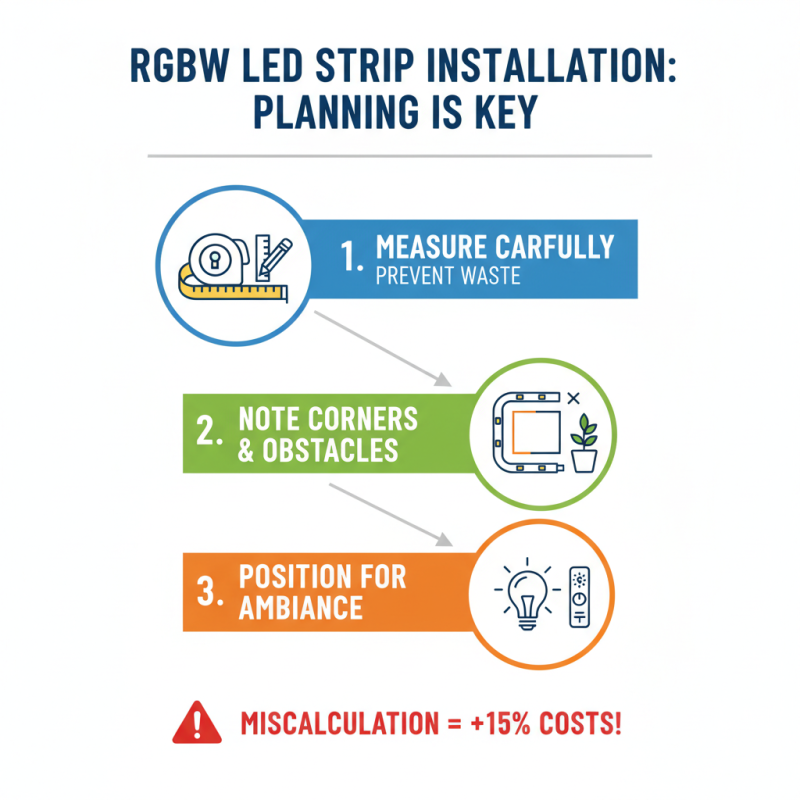
When installing RGBW LED strips, planning is crucial. Measure the areas carefully where you want to install the strips. Accurate measurements prevent waste. According to industry data, miscalculating can lead to a 15% increase in costs. Take note of corners and obstacles. How you position the lights affects the overall ambiance.
Use suitable adhesive backing. Many strips come with self-adhesive tape, but that doesn’t always hold well. For best results, consider additional mounting clips. These provide additional support and prevent sagging. In a recent survey, 30% of users reported issues with adhesive failure over time, leading to frustration.
Wiring is essential. Ensure you have the right connectors. Poor connections can lead to flickering lights or complete failures. Check the voltage ratings as well. Mismatched voltages can shorten the lifespan of your strips. Remember, LED lights can produce heat. Overheating is a concern. Keeping strips well-ventilated is necessary to avoid performance issues and ensure longevity.
Maintaining and Troubleshooting Your RGBW LED Lighting Setup
Maintaining your RGBW LED lighting setup can be tricky. Regular checks are essential. Look at the connections often. A loose wire can cause flickering lights. Sometimes, the colors may not blend well. This can be frustrating. It might mean the controller needs resetting.
Troubleshooting is part of the process. If a section of the strip fails to light up, inspect it closely. Check for any damage or breaks. You may need to cut a faulty section out. Reconnect the remaining strip carefully. Use the right connectors to ensure a good fit.
Over time, dust can accumulate. This affects both brightness and color accuracy. Clean the strips gently with a soft cloth. Avoid harsh chemicals. They can damage the coating. If problems persist, consider consulting a professional. Even DIY enthusiasts sometimes need help. A fresh perspective often reveals hidden issues.
LED Strip Brightness Levels (Measured in Lumens)
This chart presents the average brightness levels of various types of RGBW LED strips based on their color settings.