How to Choose the Best RGB LED Strip for Your Needs?
Choosing the right RGB LED strip can transform your space. Expert Mark Thompson, a lighting designer with over a decade of experience, once said, “The right RGB LED strip can change the mood of any room.” With countless options available, the selection process may appear overwhelming.
Understanding your needs is crucial. Do you prefer vibrant colors for a dynamic environment or soothing tones for relaxation? Measurement matters too. Ensure the length of the RGB LED strip fits your intended space. The brightness and color temperature also influence the atmosphere you create.
Despite the vast choices, mistakes can happen. Many people overlook compatibility with existing fixtures. Others rush into decisions without considering their primary use. Reflect on the illumination effect you desire. Take your time to compare options, ensuring your RGB LED strip meets your expectations.
Understanding RGB LED Strip Basics and Features
When selecting an RGB LED strip, understanding its basic features is essential. RGB stands for Red, Green, and Blue, the three colors used to create various hues. These strips allow users to mix colors and create stunning light displays. The most common configurations include 5050 and 3528 chips. The former is brighter and perfect for areas needing more light, while the latter is more energy-efficient.
It's crucial to consider the flexibility and length of the strip. Some strips are designed for tight bends. Others are rigid and better for straight lines. Also, check the IP rating for outdoor use. An IP65 rating, for instance, indicates water resistance, ensuring durability in various environments.
Controlling brightness and color can be achieved through different power sources. Some LED strips work with remotes; others need smart home systems. Compatibility is vital. Be aware of potential flickering if the voltage is insufficient. Not all strips support the same features, which can lead to frustration later. Choose wisely to avoid disappointment.
How to Choose the Best RGB LED Strip for Your Needs?
| Feature |
Description |
Considerations |
| Length |
Available in various lengths from 3 to 15 meters. |
Choose a length that fits your space. |
| Color Options |
Can produce millions of colors by mixing RGB. |
Consider the desired ambiance and application. |
| Brightness |
Measured in lumens; suitable for different environments. |
Higher lumens for task lighting; lower for ambiance. |
| Water Resistance |
IP rated for protection against water and dust. |
Select suitable IP rating based on installation location. |
| Control Method |
Can be controlled via remote, app, or manual switch. |
Choose based on convenience and tech compatibility. |
| Installation Type |
Adhesive backing or mounting clips available. |
Consider the surface and ease of installation. |
Assessing Your Lighting Needs and Preferences
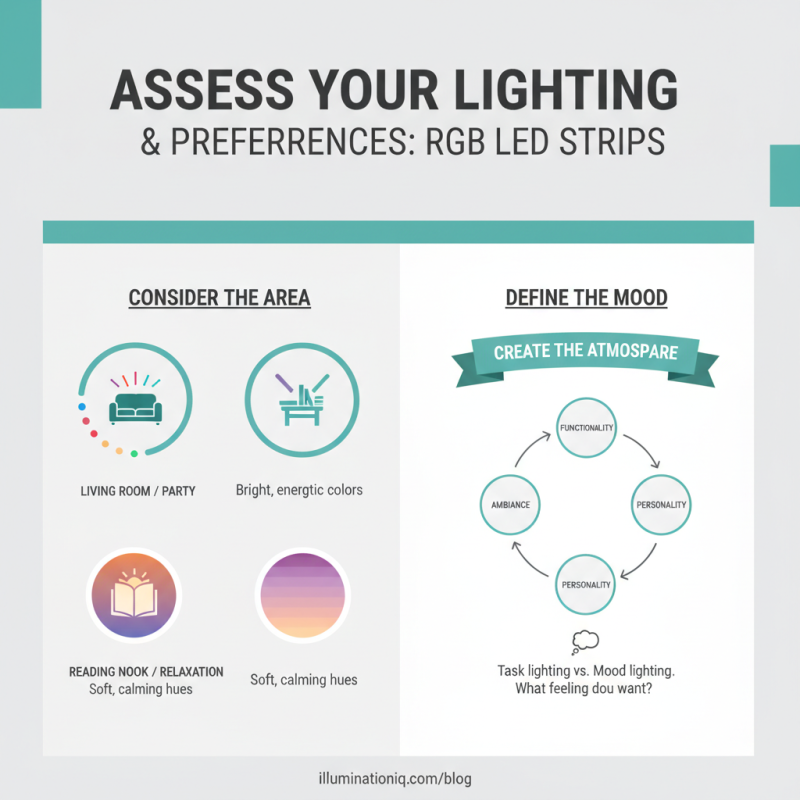
When choosing an RGB LED strip, understanding your lighting needs is crucial. Consider the areas where you plan to install the strips. Different settings, like a living room or a workspace, require distinct lighting atmospheres. For instance, bright, vibrant colors may enhance a party vibe, while soft hues may better suit a reading nook. Think about the mood you want to create.
Additionally, assess your color preferences. Do you prefer warm tones or cool shades? Many LED strips offer a variety of color options. Experiment with different combinations to see what resonates with you. Some users find it challenging to find the right balance between brightness and color accuracy. Take time to test and observe how colors appear in your space.
Also, don't overlook the practicality of installation. Measure the space where you want to place the strip. Ensure you have compatible connectors and power supplies. Some strips may require more effort to set up. Acknowledge that there may be trials and errors in fitting the lights to your vision. Reflecting on your experiences will help you refine your choices and achieve the desired aesthetic.
Evaluating Different Types of RGB LED Strips
When evaluating different types of RGB LED strips, consider their primary characteristics. Color rendering index (CRI) value is crucial. A higher CRI, above 80, reflects more accurate colors and enhances the visual appeal. Reports indicate that strips with a CRI of 90 or higher can significantly improve ambiance in spaces such as homes and offices.
Another significant aspect is the pixel density of the LED strips. Higher pixel density allows for smoother gradients and vibrant colors. Industry research shows that strips with 60 LEDs per meter provide a richer display than those with fewer. However, such strips may consume more power. Balancing brightness and efficiency is vital for sustainable lighting solutions.
Temperature variance is also worth pondering. Many LED strips operate well in controlled temperatures. However, their performance can degrade in extreme environments. A recent report highlighted that high temperatures could reduce lifespan by over 30%. Evaluating these factors helps identify the best RGB LED strips for your specific needs. Be mindful of the potential issues and ensure that your choice aligns with both your aesthetic desires and practical requirements.
Exploring Control Options for RGB LED Strips
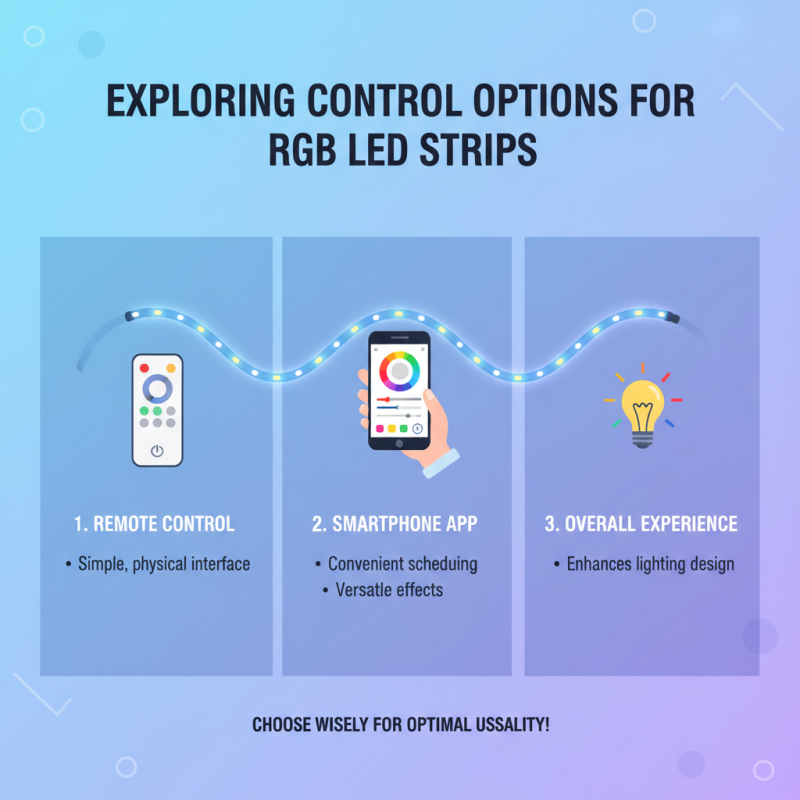
When selecting RGB LED strips, considering control options is crucial. These options influence usability and overall experience. Some strips feature simple remote controls, while others offer smartphone app integration. The convenience of using apps can enhance your lighting design by providing versatile scheduling and effects.
Another consideration is the compatibility with smart home systems. If you have existing devices, ensuring your RGB strips can connect seamlessly is vital. Voice control capabilities can also add convenience, allowing for hands-free operation. However, not all strips integrate flawlessly. Users may encounter issues with connectivity or app functionality.
Customization options vary among RGB LED strips. Some allow for precise color blending and effect patterns, while others may have limited presets. If your project requires a specific vibe, choosing a strip with extensive customization is essential. Remember that the more advanced control options can lead to a steeper learning curve. Getting the most out of your RGB LED strip may take time and experimentation.
Considering Installation and Power Requirements
When selecting an RGB LED strip, installation complexity and power requirements are critical considerations. A recent industry report highlights that improper installation can lead to performance issues and burning out LEDs. Understanding the environment where the strip will be installed is crucial. For example, if it will be exposed to moisture, you need weather-resistant strips. If it’s a tight space, consider flexible options that can be bent without damage.
Power requirements can vary significantly. Many RGB LED strips operate at 12V, while others may require 24V. According to a study by the Lighting Research Center, a strip with higher voltage tends to have better efficiency and longer lifespan. Make sure to calculate the total wattage of the LEDs to avoid overloading the power supply. Remember that running too many strips on one supply can lead to inadequate performance or even failure.
Lastly, ensure to check the amp rating of the power supply against the strip requirements. You might need additional connectors or extensions. This step can often be overlooked and could lead to frustration. While choosing the right strip can seem straightforward, each project presents unique challenges that may require careful consideration and planning.
LED Strip Power Consumption vs Length
This chart displays the power consumption of RGB LED strips based on their length. As the length of the strip increases, the power consumption also increases, which is crucial for installation and power supply considerations.