How to Choose an Inflatable Air Dancer
Choosing an inflatable air dancer is less about picking the tallest figure and more about matching it to the space, audience, and conditions. A bright tube person can catch attention outside a shop, at a fair, or beside a local event tent. But height, fabric, printing, and blower performance all affect how well it suits the job. Measure the display area before ordering. Check the product’s listed dimensions and power requirements, and confirm that the blower is included. Small details matter.
This guide explains how to compare styles, materials, airflow, and setup needs without assuming one model fits every buyer. For outdoor use, review the manufacturer’s instructions for anchoring and operating the unit, and consider how exposed the location is to wind and rain. Do not rely on appearance alone; a colorful design may be difficult to see if it clashes with nearby signs. Ask suppliers about replacement parts, cleaning, storage, and warranty terms. These questions are practical, not fussy.
I still find it easy to focus too much on the graphic. That is worth reconsidering. A clear message, suitable scale, and manageable setup may matter more over time. Compare specific product details, then choose an inflatable air dancer that fits your intended use and the space available.
Understand How Inflatable Air Dancers Work
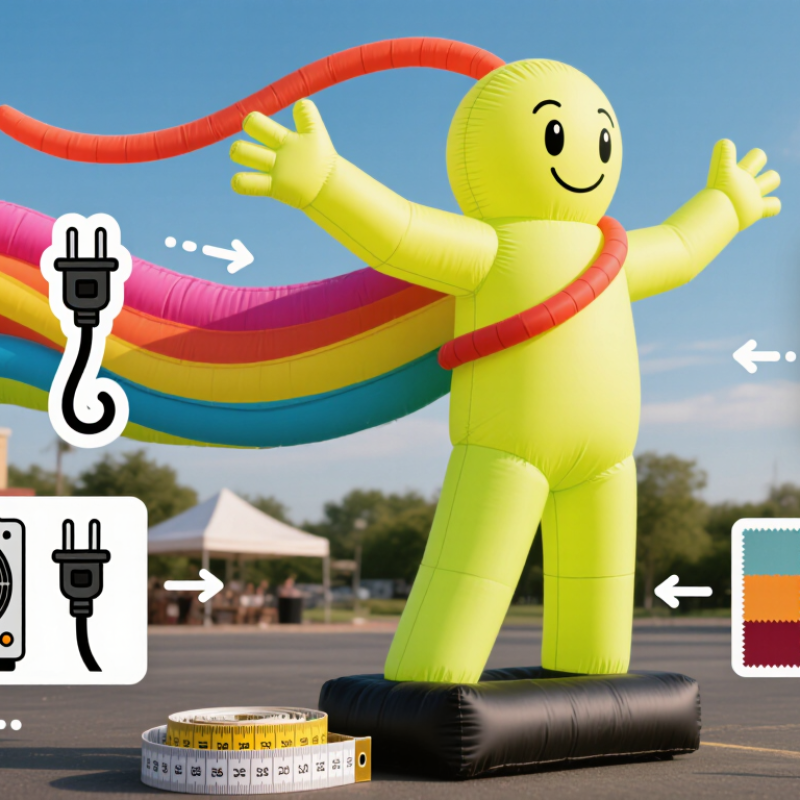
An inflatable air dancer moves as a blower pushes air into its fabric body. Air escapes through openings, often near the arms or base, while the steady airflow keeps the figure upright. As the fabric fills and shifts, the arms flap and the body bends. The motion comes from airflow, not an internal motor in each limb. Simple, but effective.
The blower’s capacity matters. If it is too weak for the figure’s size, the fabric may sag or move sluggishly. Too much airflow can strain seams or make the dancer jerk around, depending on its design. Check the maker’s recommended blower and look for clear information about outdoor use. Wind changes the picture. A wide, open spot may seem ideal, yet gusts can twist the fabric or pull at its anchors. Not always obvious.
Before choosing a model, consider its height, footprint, and the power source available at the display location. A tall figure needs room above it, not just space on the ground. Inspect the air outlet and fabric seams, and confirm that the base can be secured as directed. Keep the intake clear of leaves and loose material. Small detail, big difference. I would also allow time for a test run: the shape may look lively in a product image but behave differently in a tight doorway or breezy parking area.
Define the Purpose and Location of the Display
An inflatable air dancer should fit the job it needs to do. A shop entrance may need a bright, welcoming signal that people can spot from the road. A booth at a fair may need a shorter figure that stays visible above nearby tables. Decide whether the display should attract passing traffic, mark an entrance, or add energy to an event. That purpose helps guide its height, movement, and appearance.
The location can change the choice. Measure the available space, including overhead clearance and the area around the fan. Check where the power source sits, and note whether cords could cross a walking route.
Outdoors, nearby walls can affect airflow, while wind may make a tall figure move unpredictably. Indoors, ceiling beams and low doorways can limit height.
The setting matters.
Visit the site at the time the display will operate; sunlight, crowds, and noise can feel different then. A plan that looks fine on paper may need adjustment in person.
It is easy to overlook how much room the fabric needs to move freely. A little extra space is often useful.
Check Blower Requirements, Materials, and Weather Suitability
How to Choose an Inflatable Air Dancer
Check Blower Requirements, Materials, and Weather Suitability
An air dancer needs a blower matched to its height, diameter, and fabric weight. Check the product’s stated airflow and pressure requirements, then compare them with the blower’s rated output. A unit that is too weak may leave the figure limp; one that is poorly matched can strain seams or overheat. Keep the intake clear of grass, leaves, and loose packaging. That small detail matters.
Material affects both visibility and service life. Look for fabric that feels sturdy at the seams, where repeated movement puts stress on stitching. UV-resistant material can help when the display sits in direct sun for hours. Check how the fabric handles moisture, too. A wet dancer may become heavier and should be dried fully before storage. Details vary.
Weather suitability deserves more than a quick glance at the forecast. Wind can pull against the fabric and anchoring points, while rain may create problems for electrical equipment. Follow the maker’s operating limits, secure the base as directed, and use power connections intended for outdoor conditions. I tend to focus on the printed design first; that is easy to regret when the blower or weather does not suit the site.
How to Choose an Inflatable Air Dancer
Compare common fabric characteristics, then verify the blower and operating limits for the specific dancer you plan to use.
How to read this chart: Ratings are general comparisons on a 1–5 scale, not standardized test results. Fabric coatings, weight, seams, and construction can change performance. Before buying, match the blower’s required airflow and pressure to the product specifications, confirm the correct power supply, and follow the manufacturer’s weather and wind limits. Do not operate outdoors in conditions beyond those limits.
Compare Setup, Safety, and Maintenance Needs
When comparing inflatable air dancers, check the blower, anchoring method, and power needs before considering appearance. A compact unit may pack easily, but it still needs stable footing and clear airflow. Check the actual setup area: a doorway, loose gravel, or a crowded walkway can change what feels safe. Small details matter.
The Electrical Safety Foundation International, citing U.S. Consumer Product Safety Commission estimates, reports about 3,300 residential fires and 4,000 emergency-room injuries involving extension cords each year. That figure is not specific to air dancers, but it makes cord choice worth attention. Use an outdoor-rated cord when required, keep connections dry, and avoid pinching cords beneath doors or equipment. Secure the inflatable against expected wind, and stop use if it shifts or the blower falters. A tidy setup can still be unsafe.
For maintenance, compare how easily you can reach the air intake and clean the fabric. Dust and lint can restrict airflow; inspect seams, the power lead, and tie-down points before each use. Let the fabric dry fully before storage to reduce mildew. For fabric fire behavior, ask about relevant testing, such as NFPA 701; it does not replace safe placement. Skipping a check is tempting when setup seems quick. It is also the part I would reconsider.

