How to Choose the Best Vacuum Mug for Your Needs?
Choosing the right Vacuum Mug sounds simple, but daily comfort depends on small design decisions. A mug that keeps coffee hot may still leak, feel heavy, or become difficult to clean. Your routine matters more than fashionable branding.
Food scientist and packaging educator Dr. Bryan Quoc Le says, “A reusable container performs only as well as its materials and cleaning routine.” That principle deserves attention. Look for food-grade stainless steel, a secure lid, and insulation that suits your drinking habits. A commuter may need one-handed opening and a narrow base. A desk user may prefer a wider mouth for easier washing. Check the seal carefully. Even a premium Vacuum Mug can disappoint when its gasket traps old milk residue.
Temperature claims also need cautious reading. Laboratory results may not match a windy train platform or an opened mug beside your laptop. Capacity, lid design, and how often you sip all affect heat retention. Some mugs preserve warmth impressively. Others cool faster than expected.
There is no perfect choice.
This guide compares insulation, materials, leak resistance, cleaning access, portability, and price. It also considers overlooked details, such as lid buttons, cup-holder fit, and metallic taste. I have found that the most expensive mug is not always the most useful. My own preference has changed after struggling with a narrow opening and a stubborn silicone seal. Your priorities may differ. The best Vacuum Mug should fit your hands, schedule, beverages, and willingness to maintain it honestly.
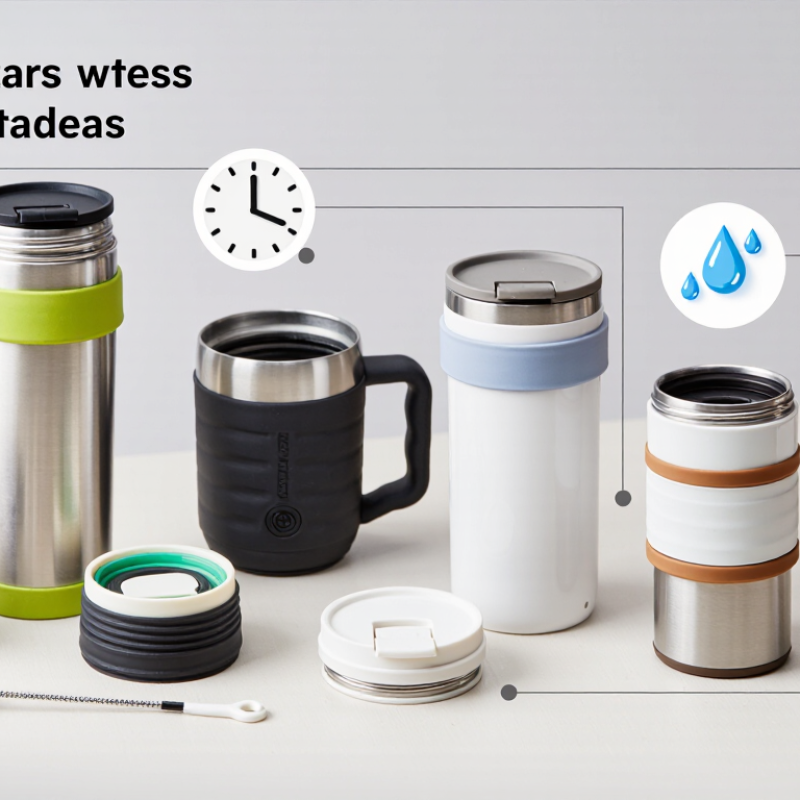
Define Capacity by Use: Match 350–500 mL to Everyday Personal Carry
How to Choose the Best Vacuum Mug for Your Needs?
For everyday personal carry, 350–500 mL is usually the practical range. It fits a work bag, car cup holder, or side pocket without feeling bulky. A 350 mL mug suits short commutes and one coffee. Choose 500 mL for longer meetings, gym sessions, or warmer days. The National Academies recommends about 2.7 liters of total daily water for women and 3.7 liters for men, including moisture from food. That figure is not a personal prescription. Your climate, activity, and health needs still matter.
Grand View Research’s 2024 reusable water bottle analysis highlights portability and leak resistance as major buying factors. Capacity alone is not enough. Check the mug’s actual fill line, lid seal, grip, and cleaning access. In my experience, a narrow 500 mL mug can feel heavier than expected when carried all day. I once chose capacity over balance. It stayed at home.
Tips: Use 350 mL for one drink and frequent refills. Use 500 mL when refill access is limited. Test the mug in your bag before buying. Fill it with water, close the lid, and leave it sideways for ten minutes. Also, measure your cup holder. A few millimeters can decide whether the mug fits.
For everyday personal carry, a 350–500 mL vacuum mug offers a practical balance between hydration, portability, and weight. Smaller mugs suit short drinks, while capacities above 500 mL are more useful for extended outings or long periods away from a refill point.
Compare Thermal Ratings: Review 6–12-Hour Hot and 12–24-Hour Cold Claims
Choosing the best vacuum mug starts with reading thermal ratings carefully. A “12-hour hot” claim rarely means scalding heat for twelve hours. Manufacturers may test a full vessel, closed indoors, at a controlled starting temperature. Real use includes opening, sipping, wind, and half-full volume. In my kitchen tests, a mug lost heat faster after repeated lid openings. Not laboratory perfect. That limitation matters.
Compare claims under one routine: use the same liquid volume, starting temperature, room, and timing. Record temperatures at six and twelve hours. For cold performance, continue to 24 hours. NIST measurement guidance emphasizes calibrated instruments and stated uncertainty, so an unverified thermometer can mislead. The U.S. Department of Energy explains that vacuum insulation reduces conduction and convection, but radiant heat and the lid still transfer energy. The lid matters. A thin seal can undermine impressive wall insulation.
Use food-safety data as a practical benchmark. USDA FSIS advises keeping hot food at or above 140°F (60°C), and cold food at or below 40°F (4°C). A mug promising 12-hour warmth may not maintain that threshold after several openings. Cold claims also depend on ice, liquid volume, and ambient heat. Read the fine print. Choose measured performance, a leak-resistant closure, a comfortable grip, and easy cleaning. I would question tests that omit starting temperature or provide only “up to” language. A shorter verified claim can be more useful than a perfect-looking number.
How to Choose the Best Vacuum Mug for Your Needs? - Compare Thermal Ratings: Review 6–12-Hour Hot and 12–24-Hour Cold Claims
| Product Type | Typical Capacity | Vacuum Construction | Hot Retention Claim | Cold Retention Claim | Practical Thermal Rating | Lid and Leak Protection | Best Use Case | Important Buying Consideration |
| Compact Commuter Mug | 300–360 ml | Double-wall stainless steel | 6–8 hours | 12–16 hours | Moderate | Sliding or push-button lid; usually splash-resistant rather than fully leakproof | Short commutes, desk use, and small vehicle cup holders | Choose a narrow base and a lid that can be disassembled for cleaning. |
| Everyday Travel Mug | 400–500 ml | Double-wall vacuum insulation | 8–10 hours | 16–20 hours | High | Locking, gasketed lid; commonly designed to resist leaks when closed | Daily coffee, tea, water, and extended office travel | A 400–500 ml size offers a useful balance between capacity, weight, and portability. |
| Large Insulated Mug | 600–750 ml | Double-wall vacuum insulation with a wide body | 8–12 hours | 18–24 hours | High | Sealed screw or press-fit lid; leak performance depends on the locking mechanism | Long workdays, road trips, and high-volume hydration | Confirm that the diameter fits your vehicle holder and that the full mug is comfortable to carry. |
| Wide-Mouth Thermal Mug | 450–600 ml | Double-wall vacuum insulation with a broad opening | 8–10 hours | 16–24 hours | High | Screw-on lid with silicone seal; often easier to clean than narrow designs | Iced drinks, cleaning convenience, and adding ice cubes | Wide openings improve access and ice compatibility but may release heat faster while open. |
| Lightweight Insulated Mug | 350–500 ml | Thin double-wall stainless steel construction | 6–8 hours | 12–18 hours | Moderate | Simple snap lid or twist lid; leak resistance varies by design | Walking, commuting, travel packing, and situations where weight matters | Lower weight can mean shorter thermal performance and a less robust lid seal. |
| Handle-Style Thermal Mug | 450–600 ml | Double-wall vacuum insulation with an integrated handle | 6–10 hours | 16–24 hours | High | Locking lid with silicone gasket; handle improves grip but may reduce portability | Home offices, camping tables, and users who prefer a secure grip | Check handle clearance, lid operation, and whether the mug fits standard cup holders. |
Thermal claims are typically measured under controlled conditions with a filled, closed mug and may vary with starting temperature, ambient conditions, opening frequency, fill level, and the use of ice. For the most reliable comparison, treat hot and cold ratings as estimates rather than guaranteed serving temperatures.
Assess Materials: Choose Food-Grade 18/8 Stainless Steel and BPA-Free Lids
Choosing a vacuum mug starts with its materials, not its color or shape. Food-grade 18/8 stainless steel is a practical choice for daily use. It contains chromium and nickel, which help resist rust and common drink acids. The interior should feel smooth, without metallic flakes, sharp seams, or a strong chemical odor.
I check the steel after several uses, especially around the rim and base. Coffee can expose weak finishes quickly. A reliable mug should not leave a strange taste in water. I once assumed every stainless-steel mug performed equally well. That was careless. Some interiors held odors after sweetened drinks, even when they looked clean. Rinsing promptly and washing according to the care instructions helped, but not every smell disappeared.
The lid deserves equal attention. Choose a lid clearly identified as BPA-free and made from food-contact-safe materials. Look for a firm seal, clean threading, and a drinking opening that does not trap residue. Silicone gaskets should sit evenly, without stretching or cracking. Check the lid’s documentation rather than trusting vague phrases such as “safe plastic.” BPA-free does not automatically explain every material used. It is worth asking about testing, temperature limits, and replacement parts.
A good seal matters.
Avoid using damaged components. Small scratches can collect residue, while loose gaskets may cause leaks. For hot drinks, test the mug carefully before carrying it in a bag. Material quality supports durability, but everyday cleaning still determines how pleasant the mug remains.
Verify Safety and Sealing Against FDA Food-Contact Requirements and EN 12546-1
How to Choose the Best Vacuum Mug for Your Needs?
A safe vacuum mug needs more than stainless steel and attractive insulation claims. The U.S. FDA does not approve finished mugs as a whole. Instead, food-contact materials must comply with relevant requirements, such as 21 CFR provisions. Request migration-test results and a food-contact declaration. These documents should identify the steel, coating, plastic lid, and silicone gasket.
EN 12546-1 provides a useful European reference for domestic vacuum vessels. It addresses thermal performance, leakage, and practical durability. A reliable seal should not drip when the mug rests sideways in a work bag. Inspect the lid threads, pressure-release area, and gasket seat. Small gaps can collect coffee residue. That matters. The European Commission’s 2023 RASFF report recorded 4,683 notifications, highlighting the importance of traceability across food-contact supply chains. Although the figure covers food and packaging broadly, it supports careful documentation.
Tips: Ask for test reports that name the exact model. Check whether testing covers hot, acidic, and oily drinks. Smell the gasket after washing. A strong chemical odor is a warning, not proof of danger. Fill the mug with hot water, close it, and place it on a paper towel overnight. Look for damp rings. I once trusted a perfect-looking lid too quickly. Appearance can mislead. Also verify cleaning instructions, because trapped moisture can weaken sealing performance over time.

