What Are the Top 10 Outdoor LED Strip Light Types?

Choosing the right outdoor led strip begins with understanding where the lighting will operate. A covered balcony needs different protection than a garden path exposed to rain, dust, and temperature changes. The best choice depends on IP rating, voltage, brightness, color temperature, and installation surface. These details affect safety, lifespan, appearance, and maintenance.

This guide examines ten practical outdoor LED strip light types, including waterproof silicone models, architectural strips, RGB options, tunable white strips, and solar-compatible designs. Each type serves a different purpose. Some create soft patio accents, while others provide stronger illumination beneath steps, railings, or roof edges. In real installations, I have found that adhesive backing often fails on damp, dusty surfaces. Mechanical clips usually provide better long-term support. Small details matter.

Look beyond brightness alone. Check heat dissipation, connector protection, power supply quality, and cut-point spacing. A strip may look impressive in a product photo but perform poorly without proper mounting and drainage. Waterproofing also requires attention at every joint, not only along the strip itself. No single type is perfect. Even experienced installers can underestimate weather exposure or cable length. This overview offers a practical comparison based on common outdoor applications, manufacturer specifications, and installation concerns. It aims to help homeowners, designers, and contractors make a safer, more informed decision. Expect useful guidance, but verify local electrical requirements before installation.
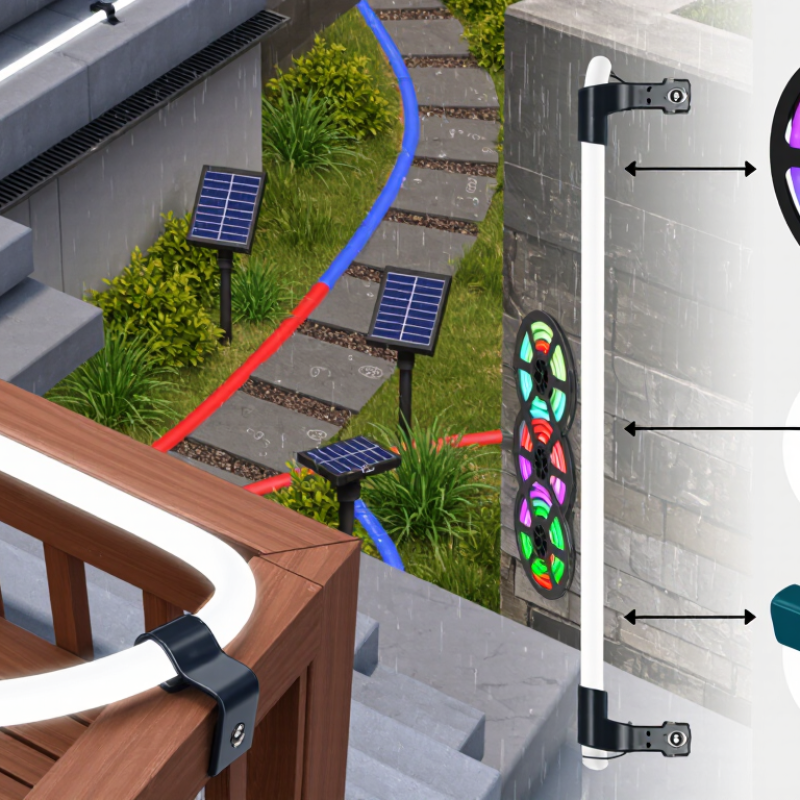
What Are the Top 10 Outdoor LED Strip Light Types?

Outdoor LED Strip Light Types by Weather Resistance and Installation Design

What Are the Top 10 Outdoor LED Strip Light Types?

Outdoor LED strip lights differ mainly by weather resistance and installation design. Under IEC 60529, IP65 strips resist water jets, while IP67 products tolerate temporary immersion. IP68 protection depends on the tested depth and duration. Choose carefully.

The ten practical types include

  1. IP65 coated strips
  2. IP67 sleeved strips
  3. IP68 fully sealed strips
  4. UV-resistant strips
  5. salt-air-resistant strips
  6. aluminum-channel strips
  7. recessed-channel strips
  8. corner-profile strips
  9. flexible neon strips
  10. stair or deck strips

Coated designs suit covered patios and eaves. Fully sealed versions work better near sprinklers, wet walkways, and exposed garden edges. Flexible neon profiles create smooth outlines around railings, while recessed channels protect the diffuser from impacts.

The U.S. Department of Energy’s 2023 Energy Savings Forecast projected solid-state lighting could reduce lighting energy use by about 75% by 2035 against a conventional-technology baseline.

Efficiency matters, but installation quality often decides real performance. Use sealed connectors, drainage paths, and outdoor-rated power supplies. Avoid sharp bends near solder joints.

Salt exposure is easily underestimated. Even IP68 products can fail when water enters a poorly sealed end cap. I would also avoid treating an IP rating as a lifetime guarantee. Temperature, sunlight, cleaning chemicals, and trapped moisture still need regular inspection.

Flexible Silicone-Coated LED Strips for General Outdoor Accent Lighting

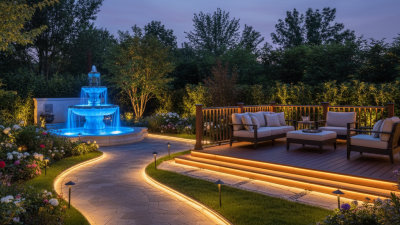
Among the top ten outdoor LED strip light types, flexible silicone-coated strips are practical for general accent lighting. They suit patios, stair edges, pergolas, balconies, and garden seating areas. Their soft silicone jacket bends around corners without sharp folds. It also protects the LEDs from splashes, dust, and occasional outdoor contact.

Installation still demands care. Check the product’s IP rating, ultraviolet resistance, operating voltage, and temperature range before cutting. Outdoor-rated does not always mean fully waterproof. A strip rated for wet locations may still fail inside a flooded channel. Use sealed connectors, drip loops, and suitable outdoor power supplies. Aluminum channels can improve heat control and create a cleaner light line. Keep cable runs reasonable, because voltage drop may dim the far end.

Test it first.

In practical installations, silicone-coated strips often create smoother curves than rigid fixtures. Warm white light usually feels comfortable near timber, stone, and planted areas. Cool white can look harsh after sunset, especially beside pale walls. I would not trust adhesive alone on dusty masonry. Mechanical clips provide better long-term support. One imperfect detail matters: cutting the strip at unmarked points can damage an entire section. Measure twice, then test a short length overnight. Weather changes, insects, and trapped moisture can reveal weaknesses that a daytime inspection misses.

High-Output LED Strips for Patios, Decks, and Architectural Illumination

Outdoor LED strip lights vary widely in output, flexibility, color, and protection. For patios, high-output white strips create clean task lighting above seating areas. Waterproof strips suit deck edges and damp locations. Tunable-white models shift from warm evening light to cooler work lighting. RGB strips add color for gatherings, while RGBW versions produce better white light. Addressable pixel strips create moving effects. COB strips provide smoother, dot-free illumination. Neon-flex strips work well for architectural outlines. Low-voltage strips improve installation safety. High-CRI strips reveal natural wood and stone colors. Solar-assisted strips can support remote areas, although their brightness may drop after cloudy days.

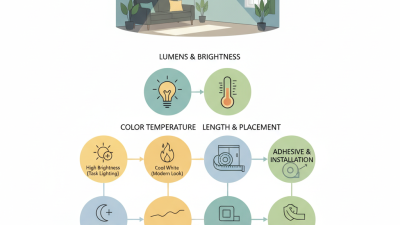
Tips: Measure each run before cutting. Check the strip’s IP rating, aluminum channel, diffuser, and power supply together. Outdoor heat still matters. Aluminum channels help control temperature and improve durability. Keep connections elevated from standing water, even with sealed components. For long patio runs, calculate voltage drop and use power injection when needed. A dimmer also prevents harsh brightness at night.

In my installations, warmer light usually feels more comfortable near dining furniture. Cooler light can sharpen architectural lines but may appear clinical. I once selected excessive output for a narrow walkway, and glare reduced comfort. That mistake changed my approach: test a short sample after sunset. Observe shadows, reflections, and nearby windows. A perfect specification on paper can still look wrong outdoors.

Smart, Color-Changing, and Addressable Strips for Outdoor Effects

What Are the Top 10 Outdoor LED Strip Light Types?

Outdoor LED strip lights now support more than simple decoration. The ten practical types include waterproof single-color, RGB, RGBW, tunable white, addressable pixel, smart Wi-Fi, Bluetooth, solar-powered, neon-flex, and motion-sensing strips. Among them, smart, color-changing, and addressable models create the strongest outdoor effects. A smart Wi-Fi strip can schedule a soft patio glow, while Bluetooth control works well near a balcony or garden. RGBW adds a separate white channel, producing cleaner light for dining areas. Addressable pixels create moving waves along steps, railings, and pergolas. They need careful programming.

Performance depends on more than color. The U.S. Department of Energy reports that LED lighting uses at least 75% less energy than incandescent lighting and lasts up to 25 times longer.

That advantage can shrink outdoors when connectors, controllers, or power supplies lack weather protection. Look for sealed construction, suitable ingress protection, UV-resistant jackets, and low-voltage operation. Keep power connections above standing water. Small details matter.

Market research also shows strong demand for connected lighting. MarketsandMarkets has projected the smart lighting market to grow from about 13.4 billion dollars in 2023 to 37.5 billion dollars by 2028. That growth does not guarantee every outdoor product performs well. I have seen impressive color effects ruined by uneven spacing and weak adhesive. Addressable strips can also feel excessive on small walls. Sometimes, a warm white strip looks better. Testing a short section before full installation remains the wiser choice.

Low-Voltage, Solar-Powered, and Waterproof LED Strips for Specialized Uses

What Are the Top 10 Outdoor LED Strip Light Types?

Outdoor LED strips now serve more than decorative lighting. The leading options include low-voltage 12V and 24V strips, solar-powered strips, IP65 waterproof strips, IP67 sealed strips, RGB color-changing strips, RGBW strips, tunable-white strips, COB strips, neon-flex strips, and motion-activated strips. Low-voltage models suit patios, stairs, and garden edges because they reduce electrical demand. Solar versions fit remote paths, but shade and winter weather can reduce runtime. That matters.

Waterproof ratings require careful reading. IP65 resists water jets, while IP67 tolerates temporary immersion under specified conditions. Neither rating guarantees safe performance after cutting or poor end sealing. I have seen attractive installations fail at exposed connectors, not along the strip itself. Choose carefully. The U.S. Department of Energy reports that LED lighting uses at least 75% less energy and lasts up to 25 times longer than incandescent lighting. For long outdoor runs, that efficiency can reduce maintenance and operating costs.

The International Energy Agency estimates lighting represents about 15% of global electricity consumption. Efficient outdoor systems therefore deserve practical planning, not just attractive specifications. Use aluminum channels for heat control, correctly sized drivers, and sealed connectors. Solar strips work best where panels receive direct sunlight. RGB and RGBW models add visual flexibility, while tunable-white strips improve evening comfort. My own design preference is conservative: brighter is not always better, and waterproof claims should be tested against the actual installation environment.

Top 10 Outdoor LED Strip Light Types

Representative nominal voltage and common ingress-protection ratings for specialized outdoor LED strip applications.

Lower-voltage strips are commonly used for portable, vehicle, and decorative installations, while 24 V and 48 V systems are better suited to longer runs because they can reduce voltage drop. IP65, IP67, and IP68 ratings indicate increasing protection against dust and water exposure; the exact rating depends on the product construction and installation method. The values shown are typical market configurations rather than universal specifications.

Filter By