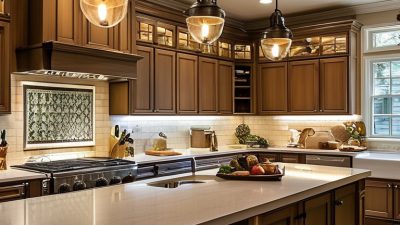
Choosing reliable China cabinet lighting suppliers requires more than comparing prices and product photos. Buyers must examine optical performance, component quality, factory experience, and after-sales support. The International Energy Agency reports that lighting represents about 15% of global electricity consumption. This makes efficient LED cabinet lighting an important purchasing decision, not merely a decorative upgrade.
The U.S. Department of Energy states that LED products can use at least 75% less energy and last up to 25 times longer than incandescent lighting. These figures explain why professional buyers increasingly request LED strips, slim light bars, and motion-sensor systems. However, performance varies widely. A bright sample may still show uneven spots beneath a kitchen shelf. A low-cost driver may also create flicker, heat, or early failure. Small details matter.
This guide examines China suppliers through practical and verifiable criteria. These include LED binning, color consistency, aluminum profiles, thermal management, wiring safety, certifications, customization ability, and production capacity. Industry reports from Grand View Research and Fortune Business Insights indicate continued expansion in the global LED lighting market, creating more supplier choices and more quality risks. A polished catalog is not enough. Factory audits, sample testing, technical documents, and customer references provide stronger evidence. Even then, no shortlist is perfect. Specifications can change, and compliance documents may require independent verification. The best supplier should match the project’s voltage, color temperature, installation method, target market, and service expectations. This comparison aims to make that decision clearer, while recognizing that real-world testing remains essential.
A competitive China cabinet lighting supplier does more than sell attractive LED strips. It solves small, visible problems: uneven shelves, harsh reflections, warm glass, and difficult wiring. The U.S. Department of Energy reports that LED lighting uses at least 75% less energy than incandescent lighting and can last up to 25 times longer. That efficiency matters in cabinets operating for several hours each evening.
Technical control separates serious suppliers from resellers. Look for high color rendering, stable color temperature, low flicker, and reliable heat management. A supplier should provide photometric test results, electrical safety documentation, and clear warranty terms. The International Energy Agency notes that lighting represents about 15% of global electricity consumption, so efficiency claims should be measurable, not decorative. In my project reviews, suppliers with sample kits usually reveal quality faster than catalog promises. Still, a sample can hide long-term failures. That deserves attention.
Tips: Request a complete sample before ordering. Test it inside dark glass shelves. Check brightness at every level. Ask for batch consistency, dimming compatibility, lead time, and replacement parts. Compare actual wattage, not marketing language. Suppliers offering custom lengths, discreet connectors, and low-profile aluminum channels are often more competitive. However, customization may increase minimum order quantities. Buyers should question that trade-off instead of accepting it automatically. Geological? No—cabinet lighting is not complicated, but careless specifications quickly become expensive.
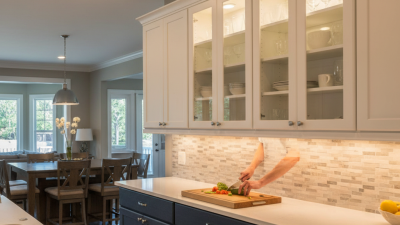
A competitive supplier is typically evaluated by measurable factors such as lighting quality, product life, customization capability, warranty coverage, and delivery performance. The benchmark scores below provide a practical comparison framework without identifying individual companies or brands.
The 0–100 scores represent recommended evaluation benchmarks for China cabinet lighting suppliers, with higher scores indicating stronger competitiveness in each dimension.
A reliable China cabinet lighting manufacturer should be judged by evidence, not catalog brightness. The International Energy Agency estimates that lighting uses about 15% of global electricity, making efficiency an important purchasing factor. Ask for measured lumens per watt, not claimed wattage. The U.S. Department of Energy’s 2023 Solid-State Lighting R&D Opportunities report identifies laboratory efficacies above 200 lm/W, but decorative cabinet products usually perform below that level. Compare real test reports carefully.
Request a production sample before placing a large order. Check color consistency beside white porcelain, especially at 2700K or 3000K. A CRI of 90 or higher usually gives more natural colors. Ask for LM-80 data, TM-21 projections, flicker results, thermal testing, and certification records matching the destination market. IEC 60598 is a useful reference for luminaire safety. Inspect connector fit, wire strain relief, adhesive strength, and heat around the aluminum channel. Small failures become visible on polished glass.
Factory audits should review incoming-material checks, aging tests, and final inspection records. Verify warranty terms, replacement parts, MOQ, lead time, and packaging protection. Request batch traceability. A supplier may provide excellent samples but inconsistent mass production. I learned that color deviation is often missed under factory lighting. Test samples in a dim room and at full brightness. No supplier should resist that request.
| Evaluation Dimension | What to Examine | Practical Benchmark | Verification Evidence | Importance | Suggested Weight |
|---|---|---|---|---|---|
| Product Safety | Electrical insulation, protection against overheating, wiring quality, and suitability for the intended installation environment. | Safety testing should cover the complete luminaire or lighting assembly, not only individual components. | Current third-party test reports, product safety files, wiring diagrams, and photographs of internal construction. | Critical | 20% |
| Applicable Certifications | Whether the product documentation matches the destination market and the exact model being supplied. | For international sales, check relevant requirements such as CE, RoHS, EMC, UKCA, or UL/ETL-related documentation where applicable. | Certificate numbers, test reports, scope of certification, issuing laboratory, and model-number consistency. | Critical | 15% |
| Light Performance | Color temperature, color rendering, brightness, beam distribution, flicker, and consistency between production batches. | Request measured data for the ordered configuration; common cabinet applications often use warm or neutral white light between approximately 2700K and 4000K. | Photometric reports, integrating-sphere data, CRI results, color-temperature tolerance, and sample comparison. | Critical | 15% |
| LED and Driver Reliability | Thermal management, driver quality, voltage stability, dimming compatibility, and protection functions. | The driver should be correctly matched to the LED load and include appropriate over-voltage, over-current, and short-circuit protection. | Driver specification sheet, thermal test results, load test records, warranty terms, and component traceability. | Critical | 12% |
| Material and Finish Quality | Aluminum profile quality, diffuser clarity, coating durability, connector strength, and resistance to discoloration. | Materials should remain dimensionally stable and visually consistent under the expected indoor temperature and humidity conditions. | Material declarations, coating or finish test records, incoming inspection standards, and approved production samples. | High | 8% |
| Customization Capability | Ability to provide custom lengths, connectors, profiles, sensors, switches, dimming systems, packaging, and installation accessories. | The supplier should confirm drawings, tolerances, electrical loads, connector types, and engineering-change procedures before production. | Technical drawings, sample approval records, prototype process, bill of materials, and engineering communication history. | High | 8% |
| Quality-Control System | Incoming-material inspection, in-process control, final inspection, defect classification, and corrective-action procedures. | A documented inspection process should define acceptance criteria, sampling levels, electrical tests, appearance checks, and traceability. | Quality manual, inspection checklists, sample inspection reports, corrective-action records, and factory-audit results. | Critical | 10% |
| Minimum Order Quantity and Sampling | Trial-order flexibility, sample charges, sample lead time, and whether sample costs can be credited toward a later order. | A capable export supplier should clearly state standard MOQ, custom MOQ, sample terms, and approval requirements before quotation. | Formal quotation, sample invoice, approved sample, MOQ schedule, and written commercial terms. | High | 5% |
| Production Capacity and Lead Time | Monthly capacity, production scheduling, peak-season planning, component availability, and shipment readiness. | Lead times should be stated separately for standard products, customized samples, and mass production, with realistic buffer planning. | Capacity statement, production schedule, previous shipment records, and agreed lead-time commitment. | High | 5% |
| Packaging and Export Readiness | Protection against impact, moisture, scratches, cable damage, and incorrect labeling during international transport. | Packaging should be validated with drop or transport-risk assessment appropriate to the product and shipping method. | Packaging specification, carton dimensions, labeling artwork, packing photos, and pre-shipment inspection records. | Important | 4% |
| Warranty and After-Sales Support | Warranty duration, exclusions, replacement policy, technical response time, and handling of recurring defects. | Terms should define coverage, required evidence, replacement responsibility, and response procedures in writing. | Signed warranty policy, service-level agreement, spare-parts plan, and documented complaint-resolution process. | Critical | 5% |
| Total Cost of Ownership | Unit price plus tooling, samples, packaging, freight, replacement parts, energy consumption, and quality-related costs. | Compare suppliers using the same specification, delivered-cost basis, warranty terms, and expected service life. | Itemized quotation, landed-cost calculation, energy specifications, tooling agreement, and warranty assumptions. | High | 8% |
Recommended approach: Request identical technical specifications and samples from several suppliers, then score each supplier against the same criteria before making a purchasing decision.
China cabinet lighting suppliers generally fall into three groups: manufacturers, custom lighting workshops, and trading companies. Manufacturers usually provide stronger production control and stable pricing. They often offer LED strips, puck lights, cabinet bars, sensors, and dimming systems. Custom workshops are useful when shelves have unusual depths or narrow wooden frames. Their product strength is flexibility, although delivery times can vary. Trading companies provide broader selections and easier sourcing. However, their technical support may depend on the original factory.
For reliable purchasing, examine color temperature, brightness, heat control, and connector quality. Warm white light around 2700K to 3000K can make glassware look comfortable and refined. Aluminum channels help reduce heat and create cleaner lines. Ask for samples before ordering large quantities. Check wiring diagrams, test reports, warranty terms, and replacement procedures. A low price may hide weaker adhesives or inconsistent LED color. No supplier is perfect. Even a capable supplier can overlook cabinet ventilation or inaccurate measurements. That deserves careful review.
Tips: Measure each compartment twice. Request a sample with real glassware. Test the lights for several hours before installation. Confirm whether the driver fits inside the cabinet. Keep spare connectors available. They are easy to forget. For long-term reliability, choose suppliers that explain their testing process clearly, answer technical questions directly, and document product specifications. Vague claims should invite more questions, not immediate trust.
When evaluating China cabinet lighting suppliers, quality evidence matters more than polished catalogs. The International Energy Agency reports that lighting uses about 15% of global electricity. Efficient LEDs can reduce this burden significantly. The U.S. Department of Energy states that LEDs use at least 75% less energy and last up to 25 times longer than incandescent lamps. Ask suppliers to provide LM-80 test data, thermal test results, and measured lumen maintenance. A certificate alone can mislead.
Reliable suppliers should demonstrate compliance with IEC 60598 for luminaires and IEC 61347 for controlgear. RoHS documentation helps verify restricted-substance controls. ISO 9001 supports process consistency, but it does not prove product safety. Look for independent laboratory reports, factory inspection records, and batch-level traceability. Traceability matters. Request samples from regular production, not only presentation samples.
Customization should cover color temperature, CRI, dimming behavior, sensor placement, cable length, and aluminum profile dimensions. For glass cabinets, low heat and low flicker are especially important. A supplier should explain voltage drop across long runs and provide installation guidance. Some suppliers promise 90+ CRI, yet test only the LED strip, not the complete fixture. That gap deserves scrutiny. Custom designs also need documented change control, because a small diffuser or driver change can affect brightness, heat, and certification status. Suppliers that welcome independent retesting are usually more dependable, although no process is perfect.
Choosing among China cabinet lighting suppliers requires more than comparing unit prices. Start with the cabinet’s actual conditions: shelf thickness, wiring routes, door movement, and display distance. Ask for a working sample, not only catalog photographs. Test brightness beside the wood finish. Check color consistency, glare, heat, and dimming response. A supplier with engineering support should read your drawings and suggest practical revisions. That experience often prevents costly changes during installation.
Request clear specifications for LED type, color temperature, color rendering, power input, lifetime testing, and driver compatibility. For glassware, 2700–3000K may create warmth, while artwork often needs controlled color accuracy. Confirm relevant safety documentation for your destination market. Inspect sample labels and batch records when possible. Small details matter. Ask how the supplier handles custom lengths, connector failures, and replacement parts. Vague answers usually become delays later.
Evaluate production reliability through a pilot order. Measure lead time from approved drawings to packed goods, then compare it with the promised schedule. I once treated a low quotation as a strong advantage; missing driver specifications proved otherwise. That was an avoidable mistake. A dependable partner should explain tolerances, packaging protection, warranty terms, and inspection procedures in writing. Video calls help, but independent pre-shipment inspection can reveal uneven light or damaged connectors. Do not ignore communication quality. Your project may need changes after the first cabinet is assembled.