China Top 10 RGB LED Strip Manufacturers for Buyers

Choosing a reliable rgb led strip manufacturer takes more than comparing prices or browsing polished product photos. Buyers need to know what sits behind the sample: LED density, color consistency, control compatibility, adhesive quality, and thermal performance. A strip may look vivid on a showroom wall, then show uneven color across a longer installation. Details matter.

LED pioneer Nick Holonyak Jr. is often credited with saying, “The LED is going to be the light source of the future.” His observation captures the technology’s promise, but buyers still need evidence before choosing a supplier. This guide to China’s top 10 RGB LED strip manufacturers gives purchasing teams a practical starting point. It considers product range, customization options, manufacturing capabilities, quality controls, and support for samples and orders. These points can help narrow a shortlist, but they cannot replace checking a real sample or confirming specifications directly.

Ask how a manufacturer tests color consistency, handles production changes, and documents its stated ratings. Request clear details about voltage, cutting intervals, controllers, and installation conditions. Small omissions can become costly later. No ranking can fit every project, and a company that suits a small retail display may not suit a large architectural installation. That limitation deserves attention. Use the profiles that follow to compare suppliers against your own requirements, then verify the details that matter most before placing an order.
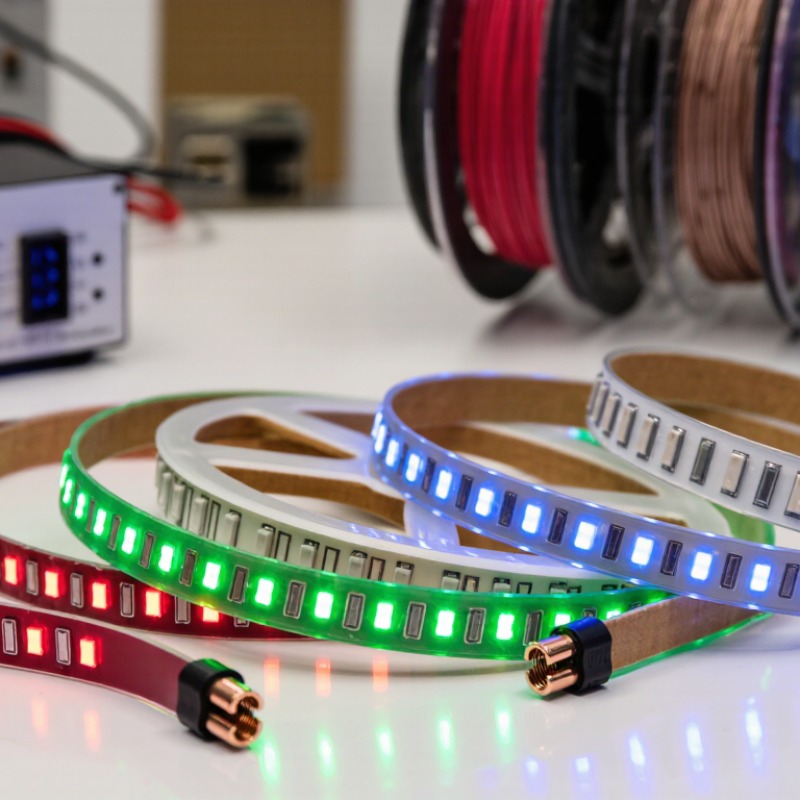
China Top 10 RGB LED Strip Manufacturers for Buyers

Understanding RGB LED Strip Types and Core Technologies

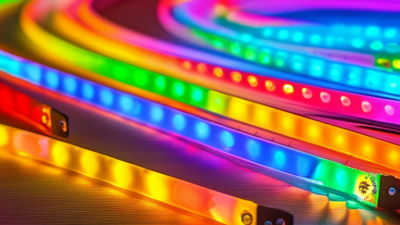
RGB LED strips create color by mixing red, green, and blue emitters. Their white output is usually mixed light, not a dedicated white diode. RGBW adds a separate white channel for cleaner task lighting. Small difference, visible at a kitchen counter. Buyers should compare chip density, power per meter, and strip width, not color names alone.

Control architecture matters. Analog strips change color across the whole run, while addressable strips use driver ICs for individual pixel control. That supports gradients and chasing effects, but adds wiring and controller complexity. At equal wattage, 24-volt strips generally draw less current than 12-volt strips, helping reduce voltage drop. Long runs may still need power injection. Check polarity and controller compatibility. Easy to overlook.

The U.S. Department of Energy’s Energy Saver LED guidance reports that LEDs use at least 75% less energy and last up to 25 times longer than incandescent lamps. This broad comparison does not guarantee RGB strip performance; color mixing, heat, and dimming affect actual results. Inspect the thermal path, copper traces, adhesive backing, and IP rating. Datasheets can still leave gaps.
How to Evaluate RGB LED Strip Manufacturers in China

When evaluating RGB LED strip manufacturers in China, look beyond catalog photos. Ask for a sample made with the same LED density, PCB width, and coating as your intended order. Details matter. Check color consistency across several sections, not just one bright patch. A phone camera can distort colors, so compare strips under the same white-light conditions. Measure voltage at both ends during operation; dimmer far-end LEDs may reveal a design or installation issue.

Review the technical sheet for chip spacing, copper thickness, operating voltage, and rated power per meter. Ask how the supplier checks solder joints and tests full production batches. Request clear definitions for water-resistance ratings, since a coated strip and its connectors may not offer equal protection. Test it. Also confirm packaging, labeling, lead time, and how defects are documented and handled. A polished sample is useful, but consistency matters more. If answers stay vague, pause and request written specifications. One imperfect detail can be acceptable; repeated color shifts or missing test records should prompt closer review.

How to Evaluate RGB LED Strip Manufacturers in China

Suggested buyer evaluation weights (%) for comparing manufacturers. These are a practical scoring framework, not survey results or ratings of specific companies.

Prioritize documented product quality and compliance, then assess electrical and thermal performance, customization, production consistency, delivery, and after-sales support. Verify each point with product samples, test reports, and written terms.

Profiles of 10 Chinese RGB LED Strip Manufacturers

China’s RGB LED strip manufacturers differ less by product names than by engineering depth. A useful profile checks chipset consistency, copper weight, binning control, and adhesive performance. Ask for a sample reel, then inspect color shifts at low brightness. Small details matter.

Grand View Research valued the global LED lighting market at USD 75.3 billion in 2023 and projected 10.4% annual growth through 2030. This broad market figure is not specific to RGB strips, but it signals rising demand for efficient, controllable lighting. Among ten Chinese manufacturer profiles, buyers may find specialists in flexible boards, high-density LEDs, waterproof encapsulation, smart controls, or custom lengths. Some factories excel at rapid sampling; others offer stronger testing documentation. Neither advantage guarantees reliable production. Request test records, including thermal and color-consistency results.

Look closely at the factory process. Can operators identify a failed segment without replacing a full reel? Are voltage-drop measurements available at the strip’s far end? Good answers should include test conditions, not vague assurances. Certification documents also need checking against the exact model. Comparisons are imperfect; public factory data rarely reveals long-term failure rates. Still, a short pilot order can expose weak solder joints, uneven adhesive, or color mismatch before a large purchase. Grand View Research, LED Lighting Market Size, Share & Trends Analysis, 2024.

China Top 10 RGB LED Strip Manufacturers for Buyers — Profiles of 10 Chinese RGB LED Strip Manufacturers

Anonymized, indicative buyer profiles. The configurations below reflect common RGB LED strip options, not verified specifications of individual manufacturers. Confirm product details, certifications, and test reports directly with each supplier.

Anonymous profile RGB strip type Common voltage Typical density Cutting / control PCB options to request Protection options Buyer focus
Profile 01 — General-purpose OEM Analog RGB, surface-mounted RGB LEDs 12 V or 24 V 30 or 60 LEDs/m Cut points depend on voltage and circuit layout; external RGB controller Confirm width, copper weight, and pad layout Uncoated indoor version; coated versions may be available Request voltage-drop data and a sample at the intended run length
Profile 02 — High-density linear lighting Dense analog RGB strip Usually 24 V; confirm per model 60–120 LEDs/m, depending on design Segmented analog control; cut intervals are model-specific Ask for PCB width and maximum recommended run length Indoor or coated options, subject to construction Check heat management, current draw, and brightness uniformity
Profile 03 — Addressable strip supplier Individually addressable RGB pixels Commonly 5 V; other designs exist 30 or 60 pixels/m are common options Pixel-level effects; verify signal protocol and cut interval Confirm data direction, pad labels, and PCB dimensions Bare, coated, or sleeved versions may be offered Test controller compatibility, power injection, and signal integrity
Profile 04 — Long-run project supplier Analog RGB, often specified at 24 V 24 V commonly selected for longer runs 30 or 60 LEDs/m External controller; feed points depend on load and installation Request copper and conductor details for the selected model Indoor or application-specific sealed construction Obtain a voltage-drop and power-injection plan for the installation
Profile 05 — Flexible installation supplier Flexible analog RGB strip 12 V or 24 V 30–60 LEDs/m Cuttable at marked intervals; controller sold separately or bundled Confirm bend radius, adhesive backing, and connector type Uncoated or coated options; verify suitability for the location Check adhesion, corner installation method, and connector compatibility
Profile 06 — Outdoor-use project supplier RGB strip with protective coating or enclosure 12 V or 24 V, depending on model 30–60 LEDs/m are common starting points Analog control is common; cut and resealing requirements vary Ask whether the coating or sleeve changes strip dimensions Request the exact IP test rating for the complete assembly Verify end caps, connectors, joints, and installation conditions—not just the strip
Profile 07 — Custom-length OEM supplier Analog RGB or addressable RGB, subject to design 12 V, 24 V, or 5 V for many addressable designs Specify target density and confirm available models Custom reel lengths do not necessarily change electrical cut intervals Submit drawing, width, pad, and connector requirements Select protection based on the installation environment Confirm MOQ, tooling needs, sample approval, and change-control process
Profile 08 — Controller-ready supplier Analog RGB strip and compatible controller options Match strip voltage to the power supply and controller 30 or 60 LEDs/m are common options Typically common-anode RGB; confirm wiring and controller output Confirm connector pinout and wire gauge Specify indoor or protected construction Test dimming range, color mixing, and controller load limits
Profile 09 — Small-batch customization supplier Standard RGB strip with selectable assembly options Confirm from the selected strip and controller specification Choose from available product configurations Pre-cut lengths or connectors may be possible by order Agree on dimensions and connector drawings before production Confirm whether protection is factory-applied or added during assembly Request sample lead time, MOQ, and inspection criteria in writing
Profile 10 — Export-oriented project supplier Analog and addressable RGB options may be available Model-dependent; verify nameplate and test data Model-dependent; request a current specification sheet Confirm control method, cut marks, and supplied accessories Request production drawing and packaging dimensions Ask for applicable test reports for the exact finished product Check traceability, batch inspection, warranty terms, and shipping documentation

Buyer note: RGB strip voltage, LED density, power consumption, cut interval, protection level, and run length vary by model. Compare like-for-like samples and request product-specific datasheets before ordering.

Comparing Product Range, Certifications, and Customization Options

China Top 10 RGB LED Strip Manufacturers for Buyers

Comparing manufacturers means looking beyond color effects and advertised brightness. Check whether each supplier offers RGB and RGBW strips, different LED densities, and suitable voltage options. A dense strip can create smoother color along a shelf, while a lower-density model may suit simple accent lighting. Confirm that the product range includes compatible controllers and power supplies, or budget for sourcing them separately.

Certifications should match the product and destination market. Ask for current documents and check that model numbers and test details correspond to the strip being quoted. Customization can include strip length, connector type, packaging, and control method. Get these details in writing, then request a sample to check color consistency, adhesive grip, and solder joints. A specification sheet helps, but it cannot reveal every production issue. Even experienced buyers sometimes miss small connector differences.

Tips: Compare like with like. Share your target length, installation location, and control needs before requesting quotes. Ask how changes affect lead time and minimum order quantities. Keep one sample for later checks; small differences can matter.

How Buyers Can Verify Quality and Manage Supplier Selection

Supplier selection should begin with evidence, not a polished sample. The IEA reported that LEDs represented about 50% of global lighting sales in 2022, but wider adoption does not guarantee consistent strip quality. Request a dated datasheet and independent test reports for the exact model. Check color temperature, color rendering, power per metre, and voltage drop at the intended reel length. Ask for results from multiple production batches. A bright one-metre sample can hide uneven color or dimming near the far end.

Look for LM-80 data for the LED packages and TM-21 projections based on that data. These methods help assess light-output maintenance, but they do not certify the complete strip, power supply, adhesive, or installation. Test a full reel under realistic conditions. Measure temperature after several hours on the intended mounting surface, and inspect solder joints and brightness at regular intervals. Keep a retained sample for comparison with delivered goods. Small details matter. Also verify whether warranty terms cover color shift and early failures, not only total loss of light. Supplier selection is rarely perfect; even a thorough audit cannot predict every production issue. Make the remaining uncertainty visible in your purchase records.

Filter By