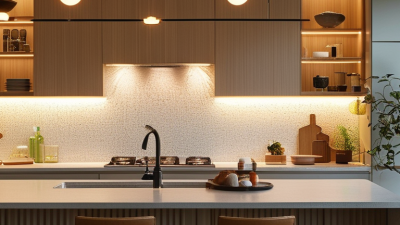
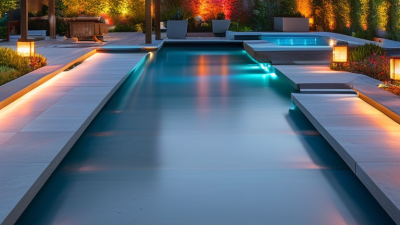
Choosing China’s best flexible LED strip lights requires more than comparing price lists and bright product photos. The right choice depends on application, safety, performance, and supplier reliability. A strip installed beneath kitchen cabinets faces different demands from one used in a hotel lobby or outdoor sign. Start with voltage, wattage, color temperature, color rendering index, IP rating, and LED density. These details affect brightness, heat, appearance, and service life.
Practical evaluation matters. Request samples before placing a large order. Bend the strip gently and inspect solder joints, copper traces, adhesive backing, and silicone protection. Run it for several hours, then check heat near the first and last sections. Noticeable brightness loss may indicate voltage drop or weak circuit design. Ask the manufacturer for test reports, product specifications, warranty terms, and production quality controls. Certifications should match the destination market, not merely appear in a sales presentation. Supplier experience with similar projects is also valuable.
Do not trust “best” too quickly. A lower price can hide thinner copper, inconsistent LEDs, or unreliable adhesive. A premium strip may still be unsuitable for a damp environment. I have seen attractive samples perform well briefly, then reveal uneven color or overheating during longer tests. That possibility deserves attention. Compare several batches, confirm consistency, and document every requirement before approval. Reliable flexible led strip lights should balance brightness, efficiency, durability, and safe operation. The strongest supplier is not always the largest one. It is the one that explains limitations clearly and supports its claims with evidence.
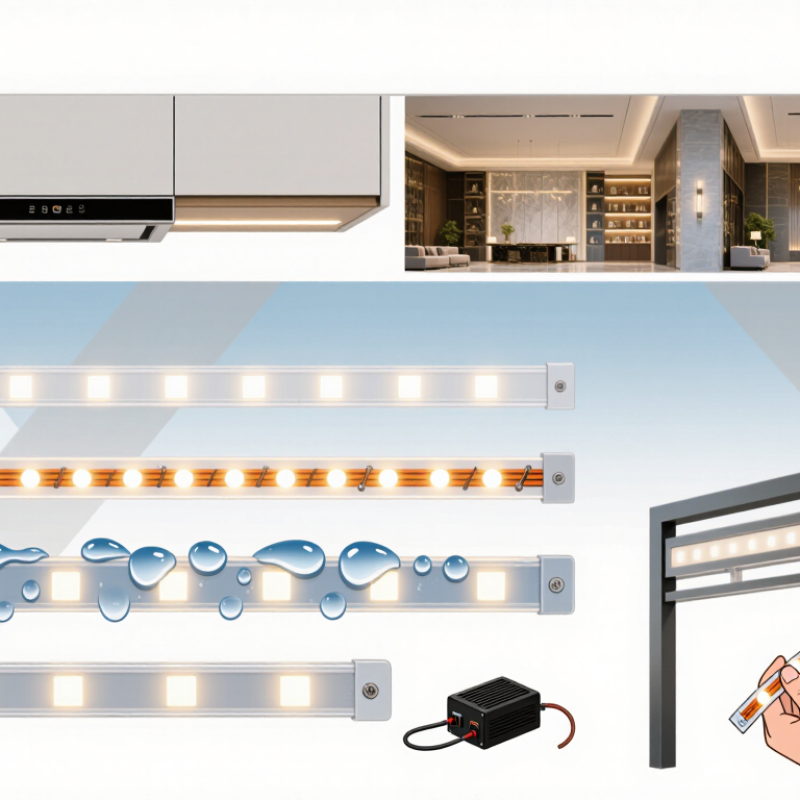
Flexible LED strip lights are not one universal product. Their construction determines where they perform well. SMD strips suit general lighting, while COB strips create a smoother, dot-free line beneath cabinets and shelves. Single-color strips support clean task lighting. RGB or tunable-white versions add visual control for displays, hospitality spaces, and residential accents.
Measure the installation before choosing a strip. Check the required length, cutting points, voltage, LED density, brightness, and color-rendering index. High-density strips usually produce fewer dark gaps, but they can create more heat. A metal profile with a diffuser helps protect the strip and improve heat dissipation. For bathrooms, kitchens, or outdoor areas, select suitable ingress protection and seal every connection carefully.
Application changes the decision. A bedroom may need low-glare, warm light, while a workshop needs higher output and stronger color accuracy. Flexible does not mean endlessly bendable. Respect the minimum bend radius, and avoid folding the strip at sharp corners. I once trusted the adhesive backing on a dusty surface, and it failed within weeks. Surface preparation matters more than expected. Long runs may also suffer from voltage drop, causing dimmer far ends. Parallel power feeding can help, but the wiring must match the load and local electrical requirements. Test a short sample first. Small trials reveal flaws.
Compare common flexible LED strip light types by construction, electrical characteristics, lighting performance, protection level, and recommended applications.
| Flexible LED Strip Type | Typical LED Package | Typical Voltage | Typical LED Density | Typical Power Range | Light Output / Color Capability | Typical CRI | Recommended IP Rating | Best Applications | Key Advantages | Important Selection Notes |
|---|---|---|---|---|---|---|---|---|---|---|
| Single-Color High-Efficiency Strip | SMD 2835 | 12 V or 24 V DC | 60–240 LEDs/m | 4.8–24 W/m | White, warm white, neutral white, or other single colors; typically about 80–130 lm/W depending on LED, density, and power | 80–95 | IP20–IP65 | General architectural lighting, cabinets, shelves, coves, work areas, and display lighting | Good efficacy, strong brightness, broad color-temperature options, and efficient heat distribution | Choose 24 V for longer continuous runs and lower voltage drop. Confirm the required color temperature and aluminum profile for heat dissipation. |
| Low-Power Single-Color Strip | SMD 3528 | 12 V or 24 V DC | 60–240 LEDs/m | 2.4–9.6 W/m | Single-color light with moderate brightness; suitable for accent and decorative illumination | 80–90 | IP20–IP65 | Signage, decorative borders, furniture accents, shallow coves, and low-brightness backlighting | Low energy consumption, economical construction, and relatively low heat generation | Not usually the first choice for primary task lighting. Verify brightness requirements before selecting a low-power version. |
| High-Brightness White Strip | SMD 5050 | 12 V or 24 V DC | 30–120 LEDs/m | 7.2–20 W/m | High-brightness single-color light; RGB versions use three LED channels for color mixing | 70–90 for white versions | IP20–IP67 | Decorative lighting, larger coves, signage, entertainment spaces, and color-changing installations | High output per package and broad availability in single-color and RGB configurations | RGB output does not provide the same white-light quality as a dedicated white LED. Use a suitable controller and power supply. |
| RGB Color-Changing Strip | 3-in-1 SMD 5050 RGB | 12 V or 24 V DC | 30–96 LEDs/m | 7.2–19.2 W/m | Red, green, blue, and mixed colors controlled through separate channels | Not normally specified as a white-light CRI product | IP20–IP67 | Hospitality, entertainment, retail displays, stage decoration, events, and feature lighting | Dynamic color effects, programmable scenes, and adjustable visual atmosphere | Requires an RGB controller. For accurate white illumination, select RGBW rather than RGB. |
| RGBW or RGBCCT Strip | RGBW 4-in-1 or RGB plus dedicated white LEDs | 12 V or 24 V DC | 30–96 LEDs/m | 12–24 W/m | Color-changing light plus dedicated white light; RGBCCT versions can adjust color temperature | 80–95 for dedicated white channels | IP20–IP67 | Hotels, restaurants, smart homes, retail environments, architectural features, and tunable-white lighting | Combines decorative color effects with more usable white illumination | Use a compatible multi-channel controller. Check channel count, maximum current, wiring method, and control protocol. |
| COB Dotless Strip | Chip-on-board LED array | 12 V or 24 V DC | 320–600 LED chips/m, depending on design | 8–20 W/m | Continuous, uniform line of light with reduced visible dotting; available in single-color and some color-changing versions | 80–95 | IP20–IP65 | Linear profiles, display cases, furniture, hospitality interiors, retail shelving, and applications where LED dots are undesirable | Very smooth light appearance and excellent performance in shallow aluminum profiles | Check the minimum bending diameter and operating temperature. A suitable aluminum channel is still recommended for higher-power versions. |
| Side-Emitting Strip | Side-view SMD LED | 12 V or 24 V DC | 30–120 LEDs/m | 4.8–14.4 W/m | Light emitted primarily from the side of the flexible PCB | 80–90 | IP20–IP65 | Edge lighting, signage, narrow channels, glass shelves, display frames, and curved architectural details | Fits locations where front-emitting strips cannot direct light effectively | Confirm the intended mounting orientation and viewing direction before installation. Side-emitting models may have lower direct output. |
| Addressable Pixel Strip | Individually controlled RGB or RGBW LEDs with integrated ICs | 5 V, 12 V, or 24 V DC | 30–144 pixels/m | 10–25 W/m | Individually programmable pixels for animations, gradients, chasing effects, and complex patterns | Usually not intended as a high-quality white-light source | IP20–IP67 | Media installations, stage effects, signage, interactive displays, entertainment, and decorative features | Advanced control over individual sections or pixels | Requires a compatible data controller and correct data direction. Power injection may be necessary on long runs. |
| Flexible LED Neon Strip | LED strip enclosed in silicone or flexible polymer housing | 12 V or 24 V DC | Varies by product design | 8–18 W/m | Uniform front-bending or side-bending continuous light with a neon-like appearance | 80–90 for white versions | IP65–IP68 | Outdoor signage, façade accents, architectural outlines, bars, hospitality décor, and curved installations | Diffused appearance, protected LEDs, and clean continuous lines without visible LED points | Identify front-bending, side-bending, or top-bending construction. Observe the specified minimum bending radius and end-cap sealing method. |